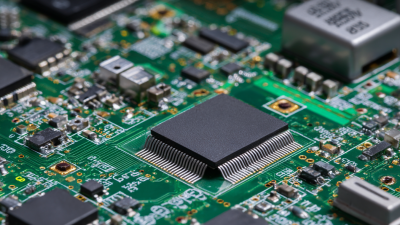
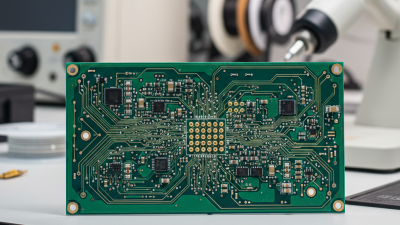
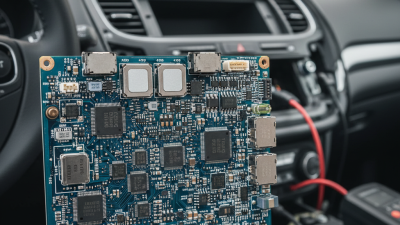
High-frequency PCBs for vehicle communication (V2X) are becoming really important in today's automotive world. They’re the backbone of real-time data sharing between cars and the infrastructure around us. With smarter transportation systems popping up everywhere, the need for efficient and reliable communication solutions has never been higher. Companies like Advanced Circuits are really pushing the envelope, developing these specialized PCBs to meet the demand.
Now, putting together these high-frequency PCBs isn’t exactly a walk in the park. Engineers have to juggle a lot—making sure signals stay clean, managing heat, and keeping costs in check. All these factors are crucial because they directly affect how well the vehicle communication boards perform and how dependable they are. Even with new tech coming out all the time, getting everything to fit together smoothly is still a work in progress.
Looking ahead, the future of transport really depends on solid communication networks. High-frequency PCBs will be key to making driving safer and easing traffic jams. As technology keeps evolving, so do the ways we make these vital components. We need continuous innovation to keep up with the fast-changing automotive scene. By taking a hard look at how things are done now, we can find ways to do better. Striking the right balance between performance and practicality is what will unlock the full potential of Vehicle communication PCBA and help shape the roads of tomorrow.
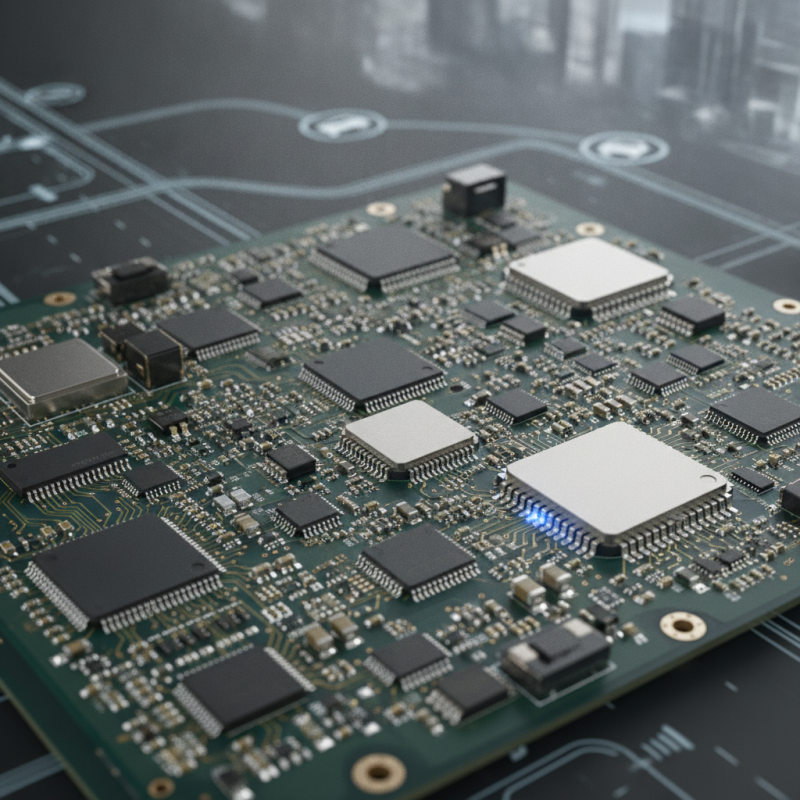
Definition of High-Frequency PCBs and Their Importance in V2X
High-frequency PCBs play a crucial role in vehicle communication, particularly in V2X technology. These PCBs enable efficient data transfer between vehicles and infrastructure. With the rise of smart transportation systems, the demand for reliable communication increases. According to a recent market report, the global V2X communication market is projected to exceed $25 billion by 2030. This growth underscores the critical need for advanced electronics, like high-frequency communication PCBs.
High-frequency communication PCBs must meet stringent performance criteria to ensure low latency and high reliability. High-frequency signals often encounter challenges such as signal loss and interference. Special materials and design techniques are necessary to enhance signal integrity. A study shows that using specific dielectric materials improves signal retention by up to 30%. However, not all manufacturers achieve this, leading to variations in performance.
Moreover, the complexity of designing these PCBs highlights the necessity for expertise in the field. Designers must consider factors like trace width, layer counts, and thermal management. These components significantly impact the overall effectiveness of V2X systems. Often, misconceptions arise regarding the capabilities of off-the-shelf PCBs, emphasizing the importance of tailored solutions for harsh automotive environments.
Key Features of High-Frequency PCBs Used in Vehicle Communication
High-frequency PCBs play a crucial role in vehicle communication systems, specifically in Vehicle-to-Everything (V2X) technology.
These printed circuit boards facilitate seamless data exchange between vehicles and various entities, including infrastructure, pedestrians, and other vehicles.
Their ability to operate efficiently at high frequencies enhances communication speed and reduces latency.
This is essential for applications like real-time traffic updates and collision avoidance systems.
One key feature of high-frequency PCBs is their material composition. They often use low-loss substrates, which minimize signal degradation over distances.
This ensures that data integrity is maintained, especially in complex urban environments.
Additionally, these PCBs are designed to withstand environmental stresses. They endure heat, moisture, and vibrations, all of which are common in automotive settings.
As technology evolves, the integration of more components on a single board poses challenges.
Balancing size and functionality demands careful engineering, which sometimes leads to potential reliability concerns.
Moreover, the design of high-frequency PCBs must consider electromagnetic interference (EMI) issues.
Proper shielding and grounding techniques are vital to mitigate noise that can disrupt communication signals.
Engineers must continuously innovate to enhance shielding effectiveness while maintaining compact designs.
There's always room for improvement, as new materials and techniques emerge.
Timely assessments of these advancements can lead to better reliability and performance in vehicle communication systems.
Applications of High-Frequency PCBs in V2X Technologies
High-frequency PCBs play a critical role in Vehicle-to-Everything (V2X) communication. Their ability to transmit data at higher frequencies allows for faster, more reliable vehicle communication. This is essential for safety and efficiency in modern transportation systems.
One significant application of high-frequency PCBs in V2X technologies is in vehicle safety systems. These PCBs enable real-time data sharing between vehicles and infrastructure. This can include alerting drivers to potential hazards. This capability enhances situational awareness and can prevent accidents. However, the integration of these systems is not without challenges. Environmental factors can impact signal integrity.
Tips: When designing high-frequency PCBs, consider the layout carefully. A poor design can lead to signal loss. Additionally, always test prototypes in different conditions. This ensures reliability under real-world scenarios.
Another application is in traffic management systems. High-frequency PCBs facilitate communication between vehicles and traffic signals. This can optimize traffic flow and reduce congestion. While the technology shows promise, there’s still a learning curve. Engineers must tackle issues like interference and power consumption. Balancing performance with efficiency remains a key challenge in this area.
Challenges in Designing High-Frequency PCBs for Vehicle Communication
Designing high-frequency PCBs for vehicle communication involves several challenges. High-frequency signals are sensitive to various factors. Impedance mismatch can lead to signal loss. A study shows that signal integrity in high-frequency microwave communication boards is critical. Poor design can cause reflection and distortion. Designers must ensure controlled impedance across the PCB.
Thermal management is another major challenge. High-frequency operations generate heat, risking component reliability. A report from the IEEE suggests that temperatures above 85°C reduce the lifespan of electronic components by 50%. Effective thermal vias and heat sinks are necessary. Designing high-frequency microwave communication boards requires careful attention to material selection. Low-loss materials can mitigate these issues but may be cost-prohibitive.
The complexity of layer stack-ups adds to the design difficulties. Multi-layer boards can improve performance but increase the risk of manufacturing defects. According to a research paper published in the Journal of Electronics, about 30% of high-frequency PCBs experience manufacturing challenges. Issues like delamination and registration problems are common. As the demand for reliable vehicle communication systems grows, overcoming these design challenges remains crucial.
Comparative Analysis of Different PCB Materials Used in V2X
In the realm of Vehicle-to-Everything (V2X) communications, the choice of PCB materials plays a critical role in performance. High-Frequency Communication Circuit Boards are essential for maintaining seamless communication between vehicles and surrounding infrastructure. Traditional materials like FR-4 might suffice for standard electronics, but they struggle under high-frequency signals. This can lead to signal loss and reduced reliability in crucial communication scenarios.
Advanced materials, such as PTFE and ceramic, offer superior dielectric properties. These materials help in minimizing signal degradation and improving overall performance. For instance, PTFE provides excellent thermal stability and minimal dielectric loss at high frequencies. However, working with these materials can be challenging. Techniques for soldering and manufacturing often require specialized skills and equipment.
Additionally, the cost of high-quality materials can hinder widespread adoption. Some manufacturers may opt for cheaper alternatives to cut costs, sacrificing performance. This raises questions about long-term reliability and safety in V2X systems. Decisions on materials must balance cost, performance, and the potential risks involved in varied driving conditions. Exploring these factors can enhance understanding of the materials used in High-Frequency Communication Circuit Boards, guiding future innovations in V2X technology.
Future Trends in High-Frequency PCB Development for Automotive V2X
High-frequency PCBs are essential for vehicle communication in V2X systems. These boards support rapid data transmission and are crucial in connecting electric vehicles (EVs) to their environment. Data from the International Data Corporation indicates that the market for automotive PCBs, including high-frequency types, is expected to grow by 14% annually through 2025. This growth is largely driven by the rise of autonomous driving and smart transportation systems.
The push towards electric vehicles brings unique challenges for PCB manufacturers. The integration of high-frequency signals requires precise layer stacking and advanced materials. Traditional PCBs may not meet the performance specifications under such demanding conditions. A report from the Embedded Market indicates that over 50% of automotive PCB production must transition to high-frequency solutions by 2024. This shift emphasizes the importance of developing innovative techniques that enhance signal integrity and minimize electromagnetic interference.
The ongoing technological evolution necessitates continuous testing and improvement. Many companies are grappling with issues related to thermal management and signal loss. As the V2X ecosystem expands, the reliance on high-frequency PCBs will only increase. Engineers must adapt their approaches, focusing on sustainability and reliability. The future of
Electric Vehicle Pcb manufacturing demands a balance between innovation and practicality.
Impact of Regulations on High-Frequency PCBs in Vehicle Communication Systems
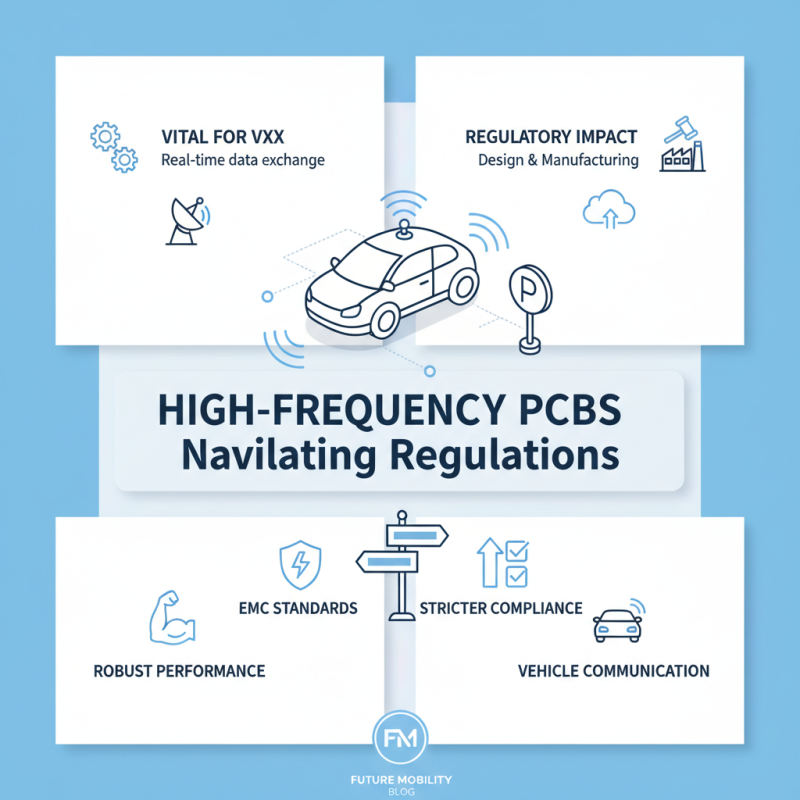
High-frequency printed circuit boards (PCBs) are vital for vehicle communication in V2X systems. These systems require robust performance to enable real-time data exchange between vehicles and infrastructure. Regulations significantly impact how high-frequency PCBs are designed and manufactured for these applications. Industry reports indicate that compliance with electromagnetic compatibility (EMC) standards has become increasingly stringent.
The introduction of policies aimed at reducing vehicle emissions has also influenced PCB design. Manufacturers must now ensure that their products meet both safety and environmental standards. A report by the International Electrotechnical Commission notes that over 50% of automotive PCB designs face challenges due to regulatory demands. This creates a need for innovative solutions that maintain performance while adhering to regulations.
Tip: Conducting regular reviews of regulatory frameworks can help manufacturers stay compliant. This proactive approach mitigates risks. As these requirements evolve, understanding the implications for high-frequency PCBs can lead to better design practices. Address potential weaknesses in existing designs to enhance reliability. Companies that adapt quickly can gain a competitive edge in the market.
Current Trends and Insights in the Flexible PCB Market: A Focus on High-Precision Solutions like Panasonic's 2-Layer FPC
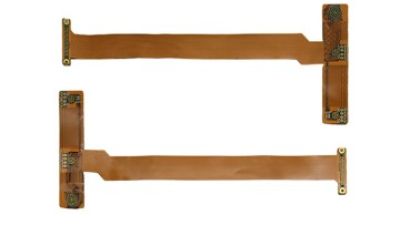
In the ever-evolving landscape of flexible printed circuits (FPC), the demand for high-precision solutions is on the rise. Industries requiring advanced electronics—such as telecommunications, medical devices, and automotive applications—benefit greatly from innovations in this field. A notable development is the emergence of 2-layer flexible FPC boards, which are engineered for optimal performance while maintaining a compact profile. These boards are typically constructed using high-quality materials that enhance their operational efficacy and reliability.
One of the key features of this 2-layer FPC board is its impressive precision, allowing for intricate designs with a 4/4mil line width and spacing, along with a minimum via diameter of just 0.25mm. Such specifications are essential for high-density electronic applications, where space is at a premium, and performance cannot be compromised. Additionally, special processes like gold immersion surface treatment and impedance control are integrated to ensure stable high-speed signal transmission, further solidifying their place in cutting-edge technologies.
The versatility of these flexible circuit boards makes them suitable for a wide range of applications, from 5G communication to sophisticated smart devices. By offering customizable solutions, manufacturers can meet specific client needs while adhering to the highest industry standards. As the flexible PCB market continues to shift towards high-precision products, the focus on quality materials and innovative manufacturing processes will play a critical role in shaping the future of electronic connectivity.
FAQS
: They enable faster, reliable vehicle communication, essential for safety and efficiency in transportation systems.
They allow real-time data sharing between vehicles and infrastructure, alerting drivers to potential hazards.
Environmental factors impact signal integrity, leading to potential issues with communication reliability.
Careful layout is crucial; poor design can result in signal loss and reduced performance.
Operations generate heat that can harm components, reducing electronic lifespan significantly.
Complex layer stack-ups increase risks of delamination and registration problems during production.
Growth in autonomous driving and electric vehicles drives demand for innovative, high-frequency PCB solutions.
They might fail to meet rigorous performance standards under high-frequency conditions required by new technologies.
Continuous testing and innovation are necessary to address issues like thermal management and signal loss.
There’s a need to blend innovation with practicality, ensuring sustainability and reliability in designs.
Conclusion
High-Frequency PCB for Vehicle Communication (V2X) plays a crucial role in enabling seamless communication between vehicles and infrastructure. These specialized printed circuit boards are designed to operate effectively at high frequencies, which is essential for the low-latency data transmission required in V2X technologies. Key features include enhanced signal integrity, reduced electromagnetic interference, and improved thermal management, all of which contribute to the reliability of vehicle communication systems.
However, designing High-Frequency PCBs for V2X comes with its own set of challenges, such as material selection and fabrication intricacies. A comparative analysis of different PCB materials reveals their varying performance in terms of signal loss and durability. As the automotive industry evolves, future trends in High-Frequency PCB development will focus on innovation and compliance with regulations that govern vehicle communication systems, thus ensuring efficient and safe connectivity in smart transportation.