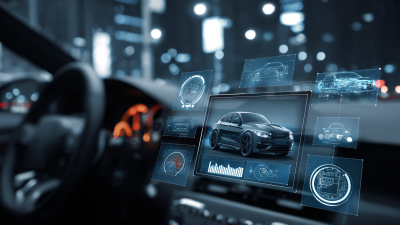
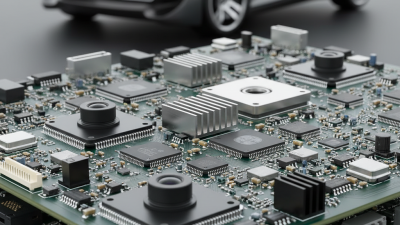
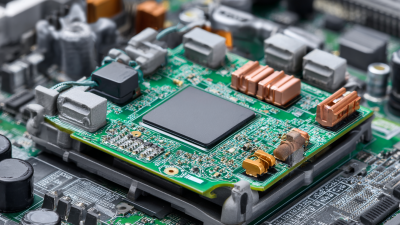
High-frequency PCBs used for Vehicle-to-Everything (V2X) communication are becoming absolutely essential in today’s automotive tech. As cars get more digital, they need communication systems that are not just reliable but also efficient. These high-frequency tech boards really boost data transfer speeds, allowing vehicles, infrastructure, and smart devices to exchange info quickly and smoothly.
Companies like ABC Electronics are working on new materials and innovative designs to get the best results. A good high-frequency PCB for V2X helps cut down signal loss and makes the whole system more durable. Of course, there are still some hurdles—things like complex design challenges and balancing cost with performance.
While the potential here is huge, it’s not all smooth sailing. Finding that sweet spot between top-notch performance and affordability is crucial. Engineers are constantly pushing the boundaries, figuring out new ways to improve and optimize. Vehicle communication PCBA needs to mesh well with all kinds of vehicles. The future of transportation truly depends on how well we can tackle these challenges head-on and keep moving forward.
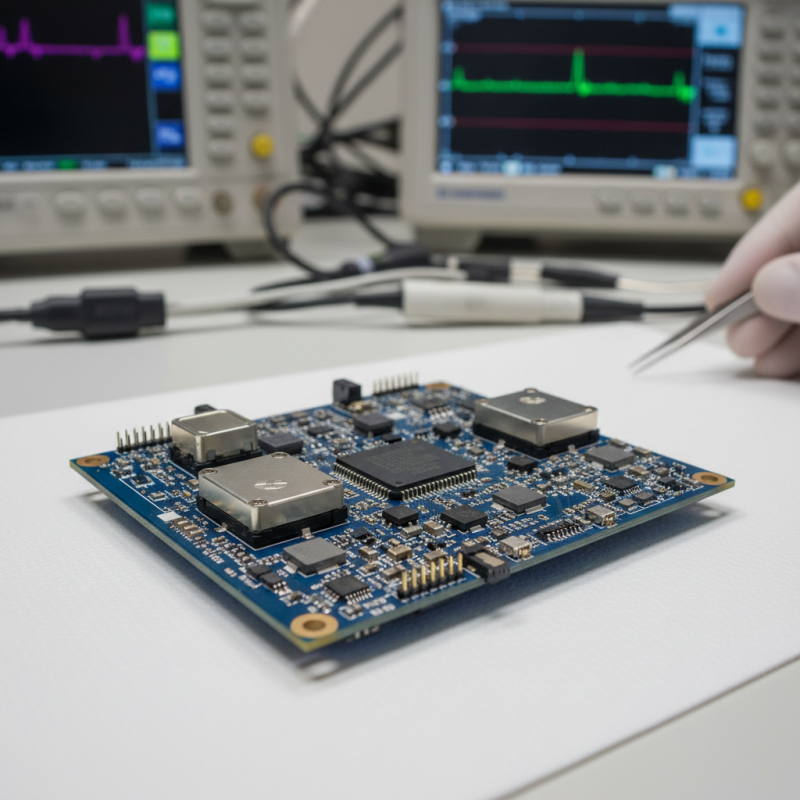
Definition of High-Frequency PCBs in Vehicle Communication
High-frequency PCBs play a crucial role in the vehicle communication sector, particularly in V2X technology. These boards facilitate communication between vehicles and surrounding infrastructure. As vehicle systems evolve, the demand for efficient data processing has increased. High-frequency communication PCB designs ensure that data is transmitted at higher speeds and with lower latency.
Research indicates that the V2X market is projected to grow significantly, reaching a value of $23 billion by 2025. The growing need for safety and efficiency in transportation further fuels this growth. High-frequency communication PCBs are essential for applications like collision avoidance and traffic management systems. However, developing these boards is not without its challenges. Signal integrity can be compromised by losses related to material selection and circuit layout.
Manufacturers must balance factors such as cost and performance. Sometimes, cheaper materials lead to increased signal loss, hindering overall system efficiency. Designers also face difficulties in achieving the required miniaturization while maintaining reliability. Overall, while high-frequency communication PCBs are pivotal in advancing V2X technology, ongoing innovation and careful consideration are necessary to meet industry demands effectively.
What is High Frequency PCB for Vehicle Communication V2X? - Definition of High-Frequency PCBs in Vehicle Communication
| Parameter |
Description |
Value |
| Frequency Range |
Typical operating frequency for V2X communications |
5.9 GHz |
| Material Type |
Common materials used for high-frequency PCBs |
PTFE, FR-4 (low-loss versions) |
| Layer Count |
Typical number of layers for high-frequency applications |
2-4 layers |
| Dielectric Constant (Dk) |
Range of dielectric constants suitable for high-frequency applications |
2.2 - 3.5 |
| Impedance |
Standard characteristic impedance for RF circuits |
50 ohms |
| Thermal Conductivity |
Importance of thermal management in high-frequency applications |
> 1 W/m·K |
| General Applications |
Common uses of high-frequency PCBs in V2X communication |
Vehicle-to-Vehicle (V2V), Vehicle-to-Infrastructure (V2I) |
Importance of V2X Communication in Modern Vehicles
V2X communication is crucial in today’s vehicles. It stands for vehicle-to-everything, connecting cars to infrastructure, other vehicles, and networks. This technology enhances safety and efficiency on the road. Cars equipped with V2X can communicate crucial data. For example, they can share information about traffic signals, road conditions, and potential hazards. Drivers gain timely alerts about accidents, allowing for smoother traffic flow.
Implementing V2X requires advanced technology. High-Frequency Microwave Communication Board plays a significant role here. These boards are vital for transmitting information effectively. With rapid data exchange, vehicles respond more quickly to changing conditions. However, there are challenges. Not all vehicles are equipped with this technology yet. Moreover, standardizing communication protocols is still a work in progress. It’s essential to improve reliability and security in these systems.
V2X communication represents progress in automotive technology. Yet, it requires careful consideration. The benefits are clear, but the road ahead is complex. Increasing the adoption of High-Frequency Microwave Communication Boards could help. With time, the future of vehicular communication may change dramatically. Enhanced connectivity can lead to smarter, safer roads.
Key Characteristics of High-Frequency PCBs
High-Frequency PCBs play a crucial role in Vehicle Communication, especially for V2X technology. These circuit boards need to operate efficiently under various conditions. They help vehicles communicate with each other and with infrastructure. This communication is essential for safety features, traffic management, and improving overall driving experience.
One key characteristic of High-Frequency Communication Circuit Board is their material composition. They often use specialized substrates to handle higher frequencies. For instance, materials like PTFE (Polytetrafluoroethylene) or ceramic offer low dielectric loss. This ensures signals remain clear and uninterrupted. Signal integrity is vital; otherwise, communication could fail.
Another factor is the design complexity. High-frequency designs require careful layout techniques. Any misalignment can introduce errors. Engineers constantly face challenges in this area. They must balance performance with manufacturability. Unlike traditional PCBs, high-frequency boards often need more stringent testing to ensure reliability. These decisions can make or break the overall functionality of vehicle communication systems.
Applications of High-Frequency PCBs in Vehicle Communication
High-frequency PCBs play a crucial role in vehicle communication, especially for
V2X (Vehicle-to-Everything) technologies. These PCBs enable effective data transfer
between vehicles and their surroundings. With EVs on the rise, the demand for reliable communication systems is growing.
High-frequency PCBs enhance signal integrity, crucial for real-time data transmission.
Their compact design allows for easy integration into various vehicle systems.
Applications of high-frequency PCBs are diverse. They are used in collision avoidance systems and traffic management.
Efficient communication is vital in these scenarios.
Electric Vehicle Pcb
designs often feature multiple layers to handle complex signals. This complexity can lead to challenges in manufacturing and testing.
Ensuring that these boards function efficiently in dynamic environments is key.
Moreover, the reliability of high-frequency PCBs can sometimes be a reflection of industry standards.
Manufacturers may face difficulties in meeting performance criteria. There's a fine balance between
speed and accuracy that must be achieved.
Addressing these issues is essential for successful V2X implementation.
The future of vehicle communication heavily relies on overcoming these obstacles.
Challenges in Designing High-Frequency PCBs for V2X
High-frequency PCBs play a critical role in vehicle communication systems, particularly for V2X
technology. However, designing these boards is no easy task. One significant challenge is maintaining signal integrity
at higher frequencies. The smaller traces and components can easily lead to signal loss or distortion. Designers must carefully consider trace width and spacing
to avoid these issues.
Another obstacle is thermal management. High-frequency operation generates heat.
If a PCB lacks sufficient heat dissipation, it can lead to failure. The choice of materials also affects thermal performance.
For example, some materials can only tolerate certain temperatures before degrading. This complicates the selection process.
Manufacturability is also a concern. Fine-pitched components require precise fabrication techniques.
Any misalignment can disrupt connections. Additionally, testing high-frequency designs can be tricky. Specialized equipment is often needed.
This can increase both time and cost, making prototyping more challenging. Balancing all these factors is essential for success in V2X PCB design.
Future Trends in High-Frequency PCB Technology for Vehicle Communication
The automotive industry is undergoing a significant shift with the rise of vehicle communication technologies like V2X. High-frequency PCBs play a crucial role in this evolution. They enable reliable communication between vehicles and infrastructure, enhancing road safety and traffic efficiency. High-frequency signals can transmit data quickly. This capability is critical for real-time communication, reducing latency.
Future trends indicate that high-frequency PCB technology will continue to advance. Innovations may focus on better materials that withstand harsh environments. Additionally, designs could become more compact to fit modern vehicle systems. However, challenges remain. Producing these PCBs can be complex. Issues with signal integrity and heat dissipation can arise. Engineers will need to address these concerns to achieve optimal performance.
Moreover, the integration of high-frequency PCBs faces economic hurdles. Cost-effective manufacturing processes are essential for widespread adoption. As technology advances, there might be a balancing act between performance and cost. Stakeholders may need to collaborate to drive innovation. Ultimately, navigating these challenges is vital for the future of V2X communication.
High-Frequency PCB Technology for Vehicle Communication V2X
This bar chart illustrates the projected growth rate of High-Frequency PCB technology in vehicle communication (V2X) from 2021 to 2025, showcasing an increasing trend as the technology advances.
Comparative Analysis of High-Frequency vs. Standard PCBs in V2X Use
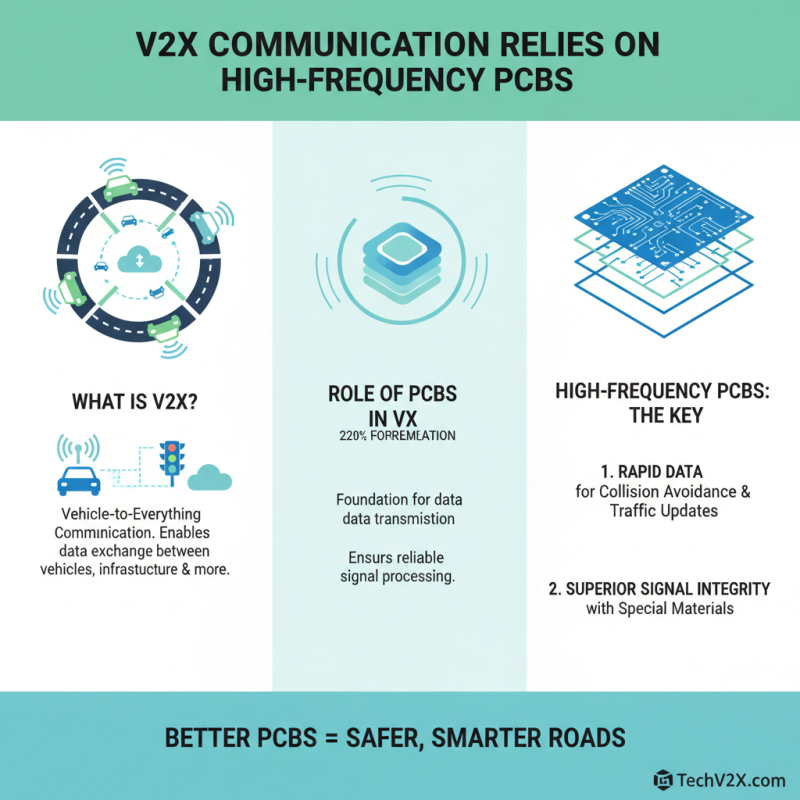
V2X communication relies heavily on the quality of printed circuit boards (PCBs). High-frequency PCBs are specifically designed to handle the rapid data transmission required for vehicle-to-everything communications. Their unique materials and construction allow for superior signal integrity. This can significantly enhance features such as collision avoidance and real-time traffic updates.
In contrast, standard PCBs often struggle with the high frequencies inherent in V2X systems. Their performance may decline, leading to potential communication delays. However, high-frequency PCBs can be more expensive and may pose manufacturing challenges. Some engineers point out that the increased costs might not always justify the benefits in every application. It's essential to analyze the specific use case to determine if high-frequency technology is truly necessary.
Ultimately, the choice between high-frequency and standard PCBs should be based on application requirements. While high-frequency models offer distinct advantages, they may come with trade-offs. Engineers need to weigh these factors carefully. Understanding the real-world implications of these choices is vital in developing effective V2X systems.
Innovative PCB and PCBA Technologies for Enhanced Medical Blood Pressure Monitoring Solutions
The realm of medical blood pressure monitoring has seen remarkable advancements in recent years, largely driven by innovative PCB (Printed Circuit Board) and PCBA (Printed Circuit Board Assembly) technologies. These advancements have significantly improved the performance and reliability of sphygmomanometers, crucial devices in both clinical settings and at-home healthcare. Research indicates that accurate blood pressure readings are critical, as hypertension affects nearly one billion people globally and is a leading risk factor for cardiovascular diseases. Ensuring precise measurements through advanced technology can aid healthcare professionals in making informed decisions regarding patient care.
Our expertise in medical blood pressure monitor PCB design and PCBA assembly speaks to the necessity of exceptional accuracy, durability, and comfort in these devices. With the implementation of cutting-edge materials and design techniques, we tailor sphygmomanometer solutions that enhance user experience and device longevity. Recent studies show that devices designed with high-quality PCBs not only improve measurement accuracy but also reduce the incidence of device failure, contributing to better health outcomes in monitoring situations. Increasing demand for home monitoring solutions further emphasizes the importance of reliable and user-friendly devices in managing chronic conditions effectively.
Moreover, incorporating features such as wireless connectivity and user-friendly interfaces into PCB designs can greatly enhance patient engagement and adherence to monitoring regimes. Given that regular monitoring is essential for managing blood pressure levels, the integration of innovative technologies facilitates seamless data transfer to healthcare providers, enabling prompt interventions when necessary. By prioritizing innovative PCB and PCBA technologies, we can elevate the standards of blood pressure monitoring solutions, ultimately leading to improved patient outcomes in various healthcare environments.
FAQS
: Stress can cause headaches, fatigue, and difficulty sleeping. Some may experience irritability or anxiety.
Try deep breathing, exercise, or talking to friends. Keeping a journal can also help.
A balanced diet can improve mood. Foods rich in omega-3 fatty acids are particularly beneficial.
Yes, feeling overwhelmed happens to many. It's crucial to take breaks and reassess priorities.
Establish a sleep routine. Limit screen time before bed, and create a comfortable sleep environment.
Self-reflection helps you understand your thoughts and behaviors. It encourages personal growth and change.
Yes, expressing feelings can relieve stress. However, it’s not always easy to open up to others.
Try setting small goals. Lack of motivation happens, and it’s okay to seek support during tough times.
Focus on your breath and surroundings. Mindfulness can reduce stress and improve overall well-being.
No, everyone faces challenges. Acknowledging struggles is a way to seek help and grow stronger.
Conclusion
High-Frequency PCB for Vehicle Communication (V2X) plays a crucial role in modern vehicular networks, facilitating real-time communication between vehicles and infrastructure. These specialized printed circuit boards are designed to handle the high-frequency signals required for effective vehicle-to-everything (V2X) interactions, ensuring enhanced safety, efficiency, and connectivity on the roads. The importance of V2X communication is growing, making it essential to understand the key characteristics of high-frequency PCBs, such as their ability to support advanced technologies and their specific applications in improving vehicle communication.
However, designing high-frequency PCBs for V2X communication presents challenges, including managing signal integrity and electromagnetic interference. Future trends indicate a shift towards more innovative PCB technologies that can better accommodate the evolving demands of vehicle communication systems. A comparative analysis of high-frequency and standard PCBs highlights the advantages of using high-frequency variants, which are crucial for the successful implementation of V2X technologies in the automotive industry.