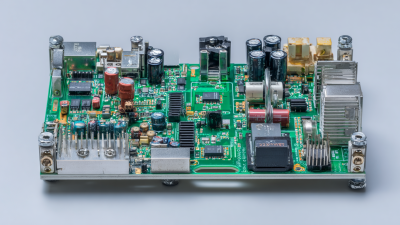
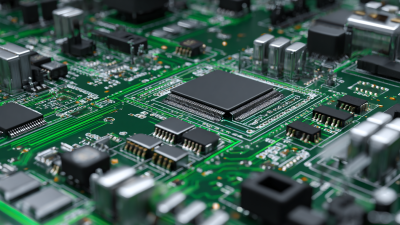
You know, as autonomous driving tech keeps evolving, one thing that's really come into focus is just how crucial printed circuit boards—or PCBs—are for making sure sensors in these systems work smoothly and reliably. I recently read in a report by Market Research Future that the global market for PCBs used in autonomous sensor tech is expected to hit around 7.5 billion bucks by 2025. That’s mostly because there's a rising need for smarter, more resilient transport options out there. Since these vehicles rely so heavily on precise sensor data, picking the right PCB isn't just a technical detail—it’s pretty much a safety deal.
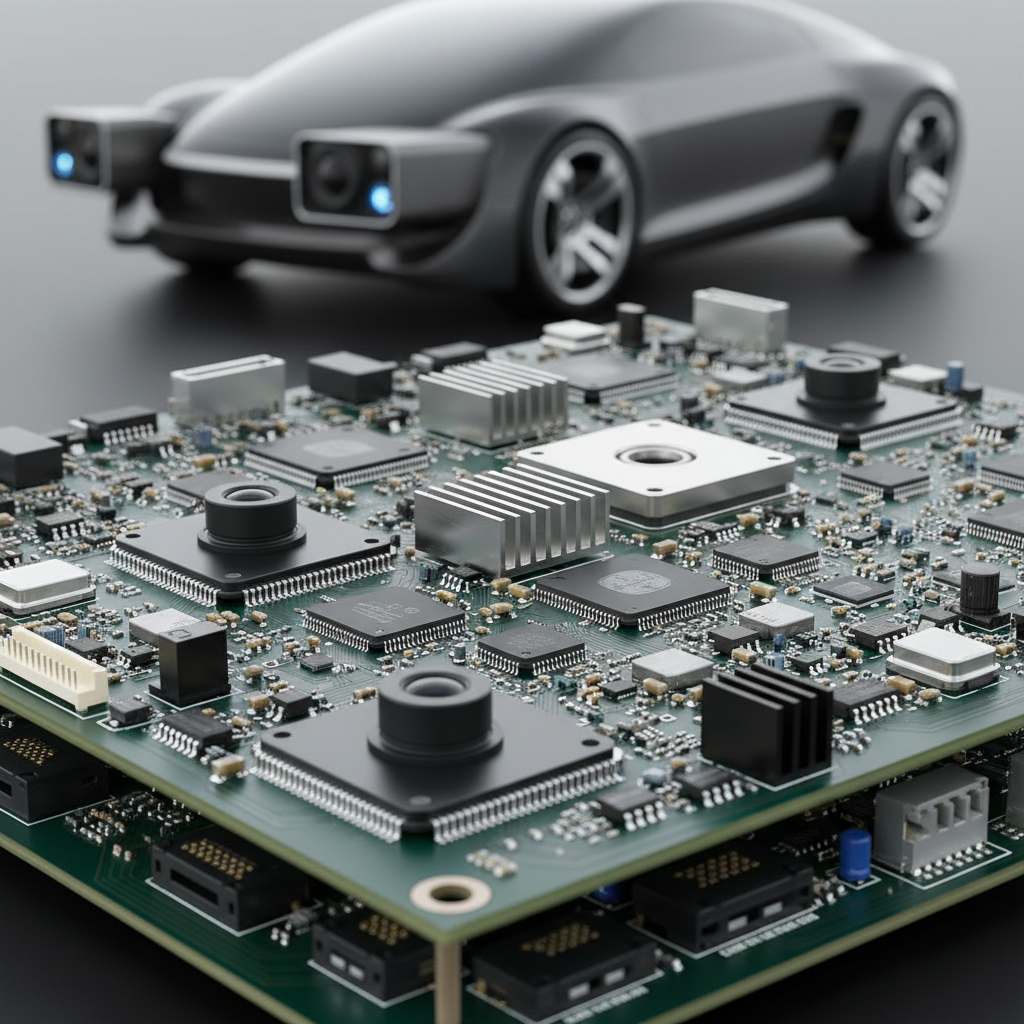
Dr. Emily Chen, who's the Chief Engineer over at TechDrive Innovations, put it pretty clearly when she said, 'Choosing the right PCB for autonomous sensor systems isn’t just about making it work; it’s about making sure the whole vehicle is safe and efficient.' That really highlights how important it is for makers and developers to think carefully about stuff like materials, heat management, and circuit design when they’re picking out PCBs in this rapidly growing field.
Getting a handle on best practices for selecting PCBs can really help engineers and decision-makers do a better job optimizing their autonomous systems, ultimately making driving safer and more dependable. As the industry moves forward, these core components—PCBs—are more important than ever. It’s pretty clear that sticking to proven methods and using the latest tech in their choices is key to really making a difference.
Key Considerations for Material Selection in Autonomous Sensor PCBs
When selecting printed circuit boards (PCBs) for autonomous driving sensors, material selection is crucial to ensure reliability and performance. One of the primary materials used is FR-4, a glass-reinforced epoxy laminate that balances cost and mechanical stability. According to a report by MarketsandMarkets, the PCB market for automotive applications is projected to reach $15.8 billion by 2026, driven largely by advancements in autonomous technology. This indicates a growing need for high-quality materials that can withstand the rigorous demands of vehicular environments.
Another key consideration is thermal management. The automotive sensors generate significant heat during operation, requiring materials with excellent thermal conductivity. Materials such as polyimide and advanced ceramics are gaining traction for high-performance applications. A study by Gartner projects that by 2025, nearly 75 million connected vehicles will be on the road, emphasizing a pressing need for PCBs that can ensure the longevity and efficiency of autonomous systems. By focusing on material properties like thermal resistance and electrical reliability, manufacturers can significantly enhance the capability and resilience of sensors in the fast-evolving landscape of autonomous driving.
Understanding Thermal Management Requirements for Autonomous Driving Applications
Thermal management plays a pivotal role in the performance and reliability of PCBs used in autonomous driving sensors. Autonomous vehicles are equipped with an array of sensors that generate heat during normal operation. If this heat is not effectively dissipated, it can lead to component failure and affect sensor accuracy. Therefore, understanding heat generation patterns and selecting materials with superior thermal conductivity are critical factors in PCB design for these applications.
Incorporating thermal vias and managing copper thickness can also enhance heat dissipation. By designing a multilayer PCB that optimally allocates components and integrates heat sinks, manufacturers can ensure better temperature regulation. Additionally, utilizing thermal simulation software during the design phase allows engineers to predict temperature fluctuations and make necessary adjustments.
This proactive approach not only extends the lifespan of sensors but also maintains their operational efficiency, ensuring that autonomous vehicles can navigate safely in various environments.
Evaluating Signal Integrity for High-Speed PCB Design in Autonomous Sensors
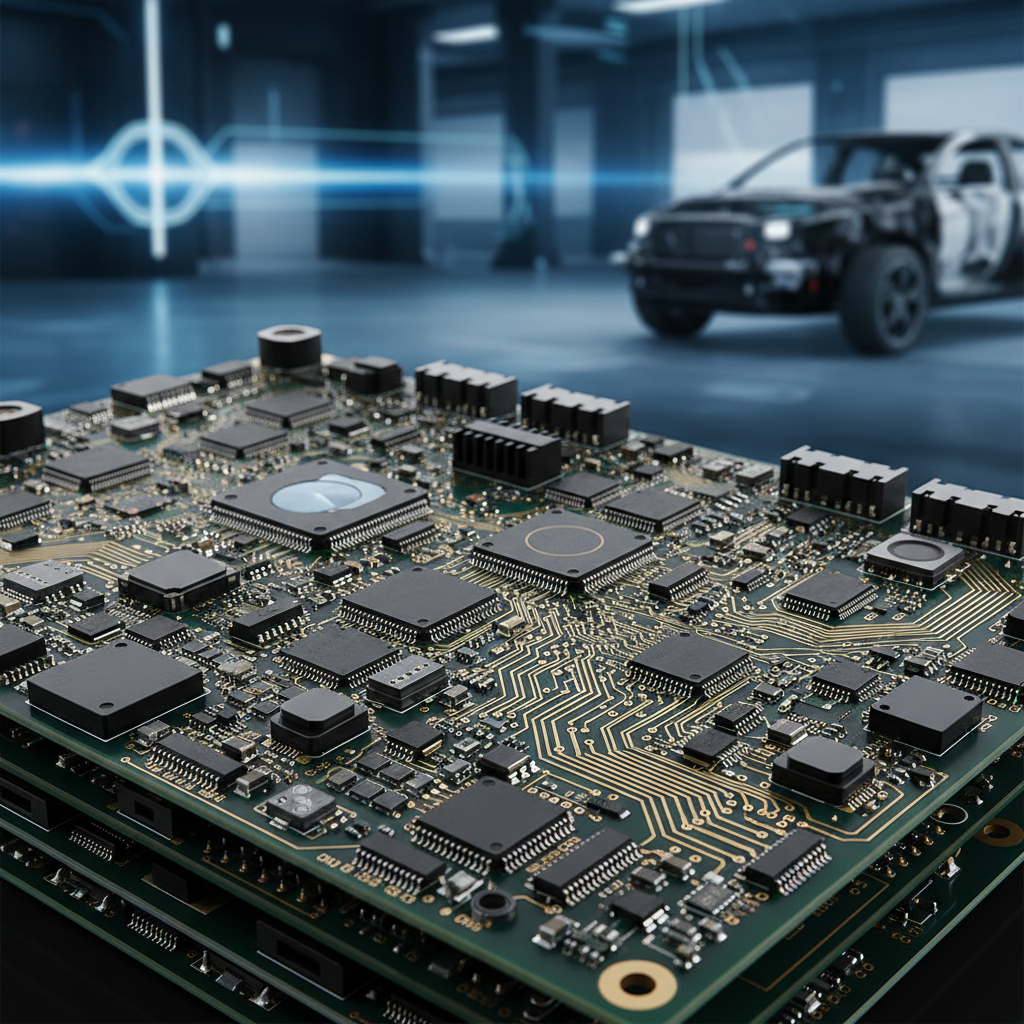
When designing printed circuit boards (PCBs) for autonomous driving sensors, evaluating signal integrity is paramount due to the high-speed data transmission requirements in these applications. The automotive printed circuit board market is expected to grow from $10.98 billion in 2025 to $18.79 billion by 2035, showcasing a surging demand for innovative designs that prioritize both performance and reliability. High-speed autonomous sensors depend on optimal signal integrity to reduce noise and ensure precise data interpretation, which is crucial for making split-second decisions in driving conditions.
Recent advancements in image signal processors (ISPs) also highlight the importance of managing signal integrity. These ISPs are engineered to enhance image quality while minimizing noise components in camera sensors, contributing directly to the reliability of visual data in autonomous vehicles. The integration of strategies such as Power-over-Coax technology further aids in improving electromagnetic interference (EMI) control, thereby supporting the efficient management of both power and data signals necessary for high-speed sensor applications. As the industry evolves, adopting comprehensive solutions in PCB design will be essential to meet the rigorous demands of autonomous driving technologies.
Best Practices for Layer Stack-Up in PCB Design for Autonomous Vehicles
When designing printed circuit boards (PCBs) for autonomous driving sensors, the layer stack-up is a critical consideration that can greatly influence performance and reliability. A well-thought-out layer stack-up helps manage electromagnetic interference (EMI) and ensures signal integrity, which is vital in high-speed applications like autonomous vehicles. Using a symmetric stack-up design can aid in reducing the impact of manufacturing variations and improving thermal performance.
One essential tip is to prioritize the use of a ground reference plane. This not only provides a solid return path for signals but also minimizes noise and enhances EMI shielding. Additionally, consider the controlled impedance of the signal traces; this is crucial for maintaining signal quality amidst the high frequencies often used in sensors. Another key practice is to separate analog and digital signals within the stack-up to reduce interference, ensuring more reliable sensor data processing.
It's also beneficial to optimize the number of layers based on complexity and space requirements. While additional layers can improve layout performance, they can also add to manufacturing costs and complexity. Striking a balance between functionality and practicality will ensure the PCB effectively supports the needs of autonomous driving technology.
PCB Layer Stack-Up for Autonomous Driving Sensors
This chart illustrates the typical thickness of various layers in a PCB used for autonomous driving sensors. Understanding these parameters is crucial for optimizing the performance and reliability of the PCB in such applications.
Designing for EMI/EMC Compliance in PCB Layout for Autonomous Driving Systems
When designing printed circuit boards (PCBs) for autonomous driving sensors, one of the most critical considerations is ensuring compliance with Electromagnetic Interference (EMI) and Electromagnetic Compatibility (EMC) standards. These factors play a pivotal role in the performance and reliability of high-tech automotive systems. Poor EMI/EMC design can lead to malfunctions in essential sensors, causing safety risks in autonomous driving applications.
To achieve adequate EMI/EMC compliance, start by implementing a solid grounding strategy. Good grounding practices reduce signal interference and improve overall system stability. Shielding sensitive components with metallic enclosures can further mitigate electromagnetic noise. Additionally, careful selection of trace routing can minimize loop areas, reducing potential inductance and susceptibility to interference.
It’s also essential to consider component placement and orientation. Place high-speed signal lines away from power lines to reduce cross-talk, and group similar components together. Regularly test for EMI during the design phase to troubleshoot any potential issues early in the development process. By focusing on EMI/EMC compliance, designers can ensure that their PCB layouts support the reliable operation of autonomous driving sensors, ultimately enhancing the safety and functionality of these advanced systems.
Optimizing Cost-Effectiveness Without Compromising Quality in PCB Choices
When selecting printed circuit boards (PCBs) for autonomous driving sensors, balancing cost-effectiveness and quality is paramount. The automotive industry demands high reliability and performance, especially for components that play a role in safety and navigation. One approach to optimizing costs is to choose PCB materials that offer a good compromise between performance and price. For example, while high-speed materials may enhance signal integrity, they can also significantly increase production costs. Opting for standard materials that meet specific performance requirements can lead to substantial savings without compromising on the critical functionalities of the sensors.
In addition to material selection, manufacturer collaboration plays a crucial role in achieving cost-effectiveness. Engaging with PCB manufacturers early in the design process can yield insights into manufacturability and potential cost reductions. This proactive approach allows for adjustments in design, such as simplifying circuit layouts or minimizing layer counts, which can lower production expenses. Furthermore, regular quality assessments and clear communication with suppliers help ensure that even budget-friendly PCB choices adhere to the necessary quality standards vital for the demanding environments of autonomous driving applications.
10 Essential Tips for Choosing PCB for Autonomous Driving Sensors - Optimizing Cost-Effectiveness Without Compromising Quality in PCB Choices
| Tip Number |
Tip Description |
Cost Impact |
Quality Consideration |
| 1 |
Select a high-quality base material |
Higher upfront cost |
Improved signal integrity |
| 2 |
Optimize circuit layout |
Reduced material waste |
Enhances performance |
| 3 |
Consider thermal management solutions |
Increased manufacturing cost |
Critical for reliability |
| 4 |
Prioritize supplier experience |
Varies by supplier |
Ensures quality assurance |
| 5 |
Evaluate testing procedures |
Can increase project costs |
Ensures long-term functionality |
| 6 |
Incorporate design for manufacturability (DFM) |
Potential cost savings |
Reduces defects |
| 7 |
Utilize advanced manufacturing techniques |
Higher initial expenses |
Improves performance metrics |
| 8 |
Choose appropriate surface finish |
May affect cost |
Affects solderability |
| 9 |
Consider lifecycle costs |
Affects long-term investment |
Ensures system longevity |
| 10 |
Review regulatory compliance |
Non-compliance costs |
Critical for market entry |
Enhancing RF Performance: The Role of Taconic TSM-DS3 High-Frequency PCB in Advanced Communication Systems
In the realm of advanced communication systems, enhancing RF performance is critical for achieving optimal signal integrity and reliability. The Taconic TSM-DS3 high-frequency PCBs exemplify this enhancement, specifically engineered for superior performance in RF and microwave applications. These double-sided boards feature an immersion gold surface treatment, which not only promotes excellent conductivity and solderability but also offers exceptional corrosion resistance. This attention to surface quality ensures that the boards maintain their performance even in challenging environments, reflecting the demands of modern telecommunications and aerospace systems.
The unique properties of Taconic TSM-DS3, notably its low dielectric constant and minimal loss tangent, significantly contribute to its outstanding thermal stability and signal fidelity. These attributes make it an ideal choice for high-speed applications where preserving signal quality is paramount. Furthermore, the adaptability of these high-frequency PCBs allows them to be customized according to specific project requirements, making them a versatile solution for various sectors, including defense. With a robust design and proven reliability, Taconic TSM-DS3 high-frequency PCBs stand as a cornerstone in the backbone of contemporary RF technology deployments, ensuring that systems operate efficiently and effectively.
FAQS
: The primary material used is FR-4, a glass-reinforced epoxy laminate that balances cost and mechanical stability.
Thermal management is crucial because automotive sensors generate significant heat during operation, requiring materials with excellent thermal conductivity to ensure reliability and longevity.
Materials such as polyimide and advanced ceramics are gaining traction due to their excellent thermal properties.
Signal integrity is paramount because optimal signal quality is necessary for high-speed data transmission, which is critical for real-time decision-making in driving conditions.
Strategies include using Power-over-Coax technology, which improves electromagnetic interference (EMI) control and supports efficient management of power and data signals.
A recommended practice is to use a symmetric stack-up design to reduce the impact of manufacturing variations and improve thermal performance.
A ground reference plane provides a solid return path for signals, minimizes noise, and enhances EMI shielding.
It’s important to separate analog and digital signals within the stack-up to reduce interference and ensure more reliable sensor data processing.
The number of layers should balance complexity and space requirements while considering the impact on manufacturing costs and layout performance.
The automotive PCB market is expected to grow from $10.98 billion in 2025 to $18.79 billion by 2035, driven by advancements in autonomous technology.
Conclusion
In the evolving landscape of autonomous vehicles, selecting the right PCB for Autonomous Driving Sensors is crucial for optimal performance. Key considerations include material selection, which directly impacts the durability and reliability of the sensors. Effective thermal management is essential to ensure that these sensors operate efficiently under varying temperatures, while maintaining signal integrity is crucial for high-speed data transmission necessary in autonomous applications. The layout must adhere to EMI/EMC compliance standards to minimize interference, and best practices in layer stack-up can enhance both performance and stability.
Additionally, companies like Shenzhen Rich Full Joy Electronics Co., Ltd. play a pivotal role in this field, offering innovative solutions that balance cost-effectiveness with uncompromised quality. By focusing on these aspects, engineers can develop PCBs that not only meet the complex demands of autonomous driving but also foster advancements in this transformative technology.