Hey, when you’re diving into the world of advanced materials, Rogers 4350 definitely catches your eye. It’s this pretty special low-loss laminate that's perfect for high-frequency stuff. I remember Emily Johnson, a materials expert over at Rogers, once said, ‘Rogers 4350 strikes a really great balance between performance and cost—that’s not something you see every day.’ Honestly, that kind of says it all.
Picking the right material can seriously make or break your project, right? It’s something a lot of engineers and designers wrestle with. You want something reliable, efficient, and worth the investment. Most folks tend to go for Rogers 4350 because it’s got excellent thermal stability and electrical properties. But, here’s the thing—every project is different. Sometimes, it might be the perfect fit, but other times, maybe not so much.
Some people swear by its performance, but others are on the lookout for different options. So, it’s really important to dig into the performance numbers and see what works best for what you’re building. While Rogers 4350 is pretty much a superstar in a lot of cases, it’s not the one-size-fits-all solution. Take your time, do some research, and make sure it actually meets your specific needs before jumping in.
Overview of Rogers 4350: Key Specifications and Features
Rogers 4350 is a popular choice in the circuit board industry. Its thermal stability is impressive, with a thermal conductivity of about 0.66 W/m·K. This feature is critical for projects requiring reliable heat dissipation. Many engineers have noted the material’s excellent dielectric properties, boasting a loss tangent as low as 0.002. Such characteristics make it suitable for microwave applications.
When looking into the chemical resistance of Rogers 4350, it holds up well against various solvents. This durability adds longevity to products, ensuring they withstand harsh conditions. However, some users have found the material challenging to work with due to its brittleness. Designing for such properties requires careful planning and precision.
Reports from industry experts suggest that the versatility of ODM Rogers 4350 makes it viable for a variety of applications. Whether in automotive or telecommunications, the performance metrics are impressive. Yet, it is essential to consider the project specifics. Engineers should weigh the benefits against potential drawbacks to make informed decisions.
Performance Comparison of Rogers 4350 with Other Materials
This chart compares the dielectric constant (Dk) and dissipation factor (Df) of Rogers 4350 with several other materials. The data shows that Rogers 4350 has competitive electrical properties suitable for various applications.
Comparative Analysis: Rogers 4350 vs. Competing Materials
When undertaking a new project, choosing the right material is crucial.
Rogers 4350 is often hailed for its properties, but how does it stack up against competing options?
A comparative analysis reveals significant differences. This material boasts a low dielectric loss and a high thermal stability, making it ideal for high-frequency applications.
Its performance in RF and microwave devices can be impressive.
However, alternatives like FR-4 and PTFE also have their strengths.
FR-4 is cost-effective and widely available, which can be attractive for budget-conscious projects.
But it lacks the thermal management capabilities of Rogers 4350.
On the other hand, PTFE materials offer excellent thermal performance.
They can be a bit more expensive and challenging to work with, raising questions for some manufacturers.
Choosing Rogers 4350 may lead to superior performance in specific applications, but at a higher cost.
It is important to weigh project requirements against budget constraints.
Balancing these factors can be challenging. Each project has unique needs, and the best choice often depends on specific performance criteria and economic considerations.
Thoughtful consideration of these aspects will lead to a more informed decision.
Thermal and Electrical Properties of Rogers 4350 in PCB Design
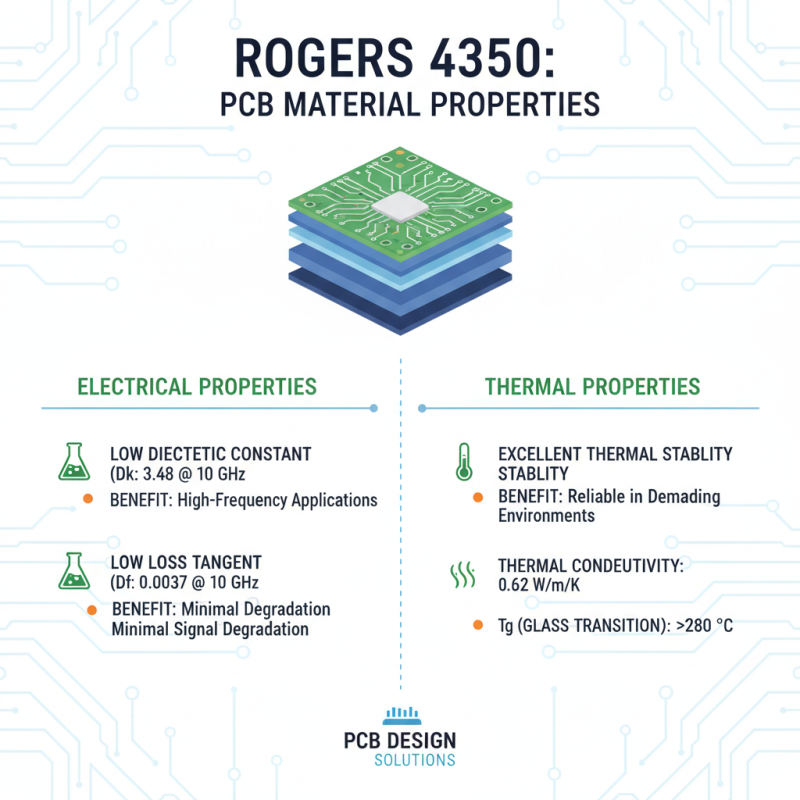
When considering materials for PCB design, the thermal and electrical properties of Rogers 4350 stand out. This material boasts a low dielectric constant of 3.48, which aids in high-frequency applications. Its low loss tangent ensures minimal signal degradation, making it suitable for demanding environments.
Rogers 4350 excels in thermal management as well. It can withstand high temperatures, maintaining its integrity during operation. This capability is crucial in applications where heat dissipation is critical. However, its brittleness can pose challenges in fabrication. Careful handling is necessary to avoid breakage during manufacturing processes.
Moreover, while Rogers 4350 has many strengths, its cost may be a hurdle for some projects. A budget-conscious choice might compromise performance. Understanding the balance between cost and quality is essential. Those venturing into PCB design should weigh these factors carefully, ensuring they select the right material for their specific needs.
Applications and Industry Use Cases for Rogers 4350
Rogers 4350 is a popular material in various industries due to its unique properties. It's widely used in microwave applications, such as antennas and RF circuits. The low dielectric constant and low loss tangent make it ideal for high-frequency designs. This material offers excellent thermal stability, allowing for reliable performance in demanding environments.
In the telecommunications sector, OEM Rogers 4350 is frequently chosen for its lightweight and strong characteristics. These features support efficient signal transmission over long distances. Its compatibility with standard manufacturing processes makes it favorable for designers. However, some users find it challenging to work with the material's thickness options, requiring careful consideration during prototyping.
Additionally, the automotive industry benefits from Rogers 4350 due to its durability and reliability. It's often utilized in radar systems and sensors. Still, potential users should assess the specific requirements of their projects before making decisions. It’s essential to evaluate whether the benefits outweigh the complexities involved in working with this material.
Cost-Benefit Analysis of Using Rogers 4350 in Projects
When considering the material for your next project, it’s crucial to evaluate the cost-benefit of using Rogers 4350. This material offers unique properties, making it a strong candidate for specific applications. The thermal performance is notable, but the price point can raise questions. Is it worth the investment?
In many cases, projects require materials that guarantee reliability and durability. Rogers 4350 provides high-frequency performance, allowing engineers to maximize efficiency. However, budget constraints may lead teams to reconsider their options. Balancing quality with affordability can be challenging.
While Rogers 4350 has proven useful in various applications, users must reflect on their specific needs. Some projects may thrive with lower-cost alternatives. It’s essential to assess the long-term benefits against immediate expenses. The choice ultimately hinges on project goals and available resources.
User Testimonials and Case Studies on Rogers 4350 Performance
Many professionals have shared their experiences using Rogers 4350 in various projects. The feedback is overwhelmingly positive. Users appreciate its high thermal stability and low dielectric loss. One engineer reported improved signal integrity in their designs. These benefits often translate to clearer data transmission.
However, some users have faced challenges. One case study highlighted the difficulty of machining the material. This can lead to delays in project timelines. Another testimonial mentioned higher costs compared to alternatives. These factors are important when considering your options.
Ultimately, the choice depends on your specific needs. For those seeking reliability and performance, Rogers 4350 may be a strong candidate. Yet, potential pitfalls warrant careful evaluation. Balancing cost and function is crucial for project success.
Future Trends: Innovations in Materials like Rogers 4350
As industries evolve, the demand for advanced materials is increasing. One notable development is the use of
innovative materials like Rogers 4350.
This material is gaining attention for its thermal stability
and low loss characteristics. Industries dealing with
high-frequency applications have found Rogers 4350 to be surprisingly effective.
The continuing trend is a shift toward materials that offer
exceptional performance. Rogers 4350 adheres to stringent
specifications, making it a reliable choice for engineers. However, sourcing this material raises questions.
Not every Rogers 4350 Supplier can meet the necessary quality and reliability
standards. Finding a trusted supplier is crucial. Not all suppliers provide the same assurance of quality.
It’s worth noting that while Rogers 4350 shows great potential, it may not suit every project.
Cost and availability are factors to consider.
Innovations in material science can sometimes lead to alternatives that may perform better at a lower cost.
It's essential to weigh all options carefully before making a decision.
Optimizing RF Performance: Insights from Industry Reports on High-Frequency Hybrid Pressing PCBs like Rogers RO4350B
In the rapidly evolving field of high-frequency applications, the demand for high-performance printed circuit boards (PCBs) has surged, particularly for technologies like 5G communication systems and automotive radar. Industry reports indicate that the global high-frequency PCB market is expected to see substantial growth, with projections suggesting a compound annual growth rate (CAGR) of over 10% in the coming years. Critical to this growth is the optimization of material properties and manufacturing techniques used in high-frequency hybrid pressing PCBs, which blend advanced materials and robust substrates to meet the unique challenges of high-speed transmission.
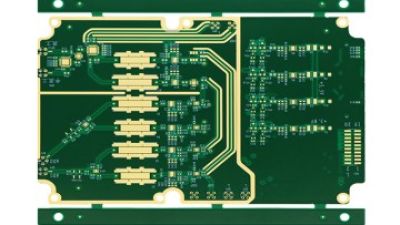
The high-frequency hybrid pressing PCB, engineered with cutting-edge Rogers RO4350B materials alongside traditional FR-4 substrates, stands out due to its exceptional performance characteristics. These PCBs feature precise impedance control and innovative resin plug hole technology that significantly enhance signal integrity and thermal management. A recent study highlighted that designs incorporating these technologies can reduce signal loss by as much as 30%, making them ideal for applications where reliability is paramount. The six-layer immersion gold design not only provides superior mechanical strength but also ensures longevity in demanding environments, effectively supporting the critical needs of aerospace and telecommunications industries.
Moreover, manufacturers are now equipped with advanced production capabilities that allow for stringent quality control and customized solutions tailored to client needs. As organizations continue to innovate, collaborations focusing on high-frequency PCB development can lead to more reliable and efficient electronic solutions, reinforcing the infrastructure of modern communication and automotive safety systems. The integration of these technologies not only enhances performance but also serves as a foundation for future advancements in electronic design and manufacturing, making it an essential focal point in industry research and development efforts.
FAQS
: It has excellent thermal stability and thermal conductivity of about 0.66 W/m·K. It also features low dielectric loss.
Thermal stability allows for effective heat dissipation in demanding applications, enhancing reliability and performance.
It is popular in telecommunications, automotive, and microwave applications. Engineers utilize it for high-frequency designs.
Yes, it can be brittle and challenging to machine. Precision and careful planning are required for design projects.
It holds up well against various solvents, adding durability and longevity in harsh environments.
Users must assess project requirements, benefits, and potential drawbacks. Balancing cost and function is critical.
Some users report higher costs when choosing it. Evaluating project budgets is important for decision-making.
Yes, many users have noted improved signal integrity and clearer data transmission in their projects.
Project specifics, material thickness, and machining challenges need careful consideration during the design process.
It excels in radar systems, RF circuits, and microwave antennas. Its unique properties make it highly versatile.
Conclusion
Rogers 4350 is a high-performance material that stands out for its excellent thermal and electrical properties, making it an ideal choice for PCB design. With key specifications that cater to various applications, a comparative analysis reveals its competitive edge over other materials in the market. Industries have increasingly adopted Rogers 4350 due to its reliability and efficiency, which are supported by numerous user testimonials and case studies highlighting successful projects.
Additionally, a cost-benefit analysis demonstrates that the advantages of using Rogers 4350 often outweigh the initial investment, particularly when considering its longevity and performance. Looking ahead, innovations in materials like Rogers 4350 promise to further enhance its application potential, setting a strong foundation for future projects in technology-driven sectors.