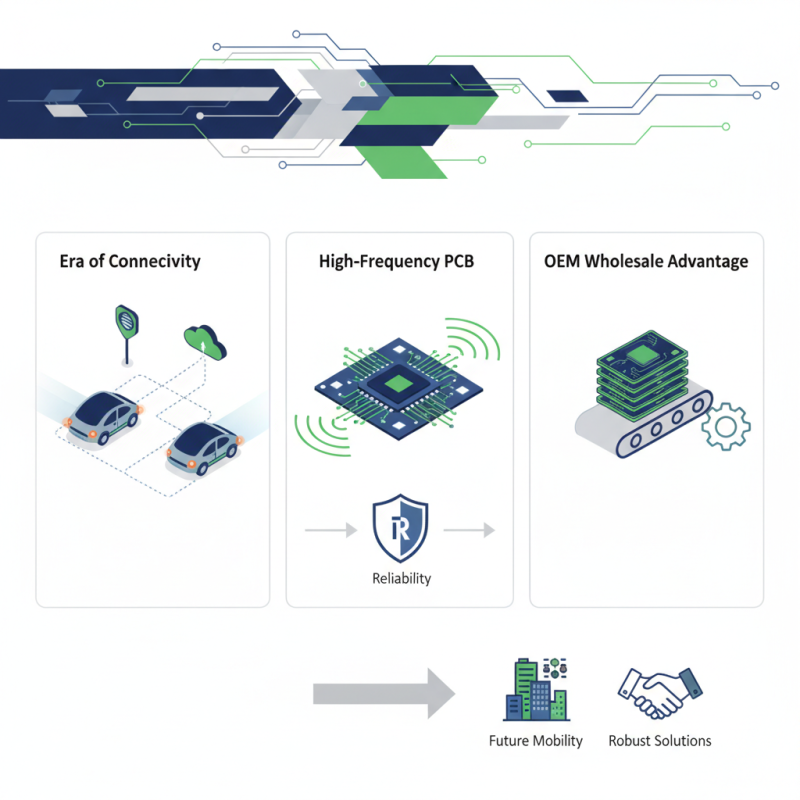
These days, as connectivity becomes a huge driver of new tech, high-frequency PCBs for vehicle communication—like V2X—are really taking center stage. Basically, these boards are key to making sure cars can talk to each other and the surrounding infrastructure effectively. Companies such as Advanced Circuits have customized their solutions to fit the unique demands of modern automotive tech. Going for OEM wholesale options is pretty common, and it helps ensure you get dependable performance no matter the conditions.
If you check out Vehicle communication PCBA, you'll see how essential this stuff is for future mobility. High-frequency PCBs enable real-time data transfer, which is obviously critical for safety and smooth operation. But here’s the thing—quality varies a lot from manufacturer to manufacturer. You really want to do your homework, weigh your options carefully, and look for experience and credibility—it makes a difference. Some folks underestimate just how complex this tech can be, which might lead to some disappointing results.
Getting your head around high-frequency PCBs can feel a bit overwhelming at first. It’s not just about making things work—it’s about ensuring reliability and future readiness. As vehicles keep becoming smarter, the need for solid, reliable communication solutions is only going up. Picking the right OEM partner with a nuanced approach can be the game-changer for seamless integration in today’s fast-changing automotive scene.
Understanding V2X Communication and Its Importance in Vehicles
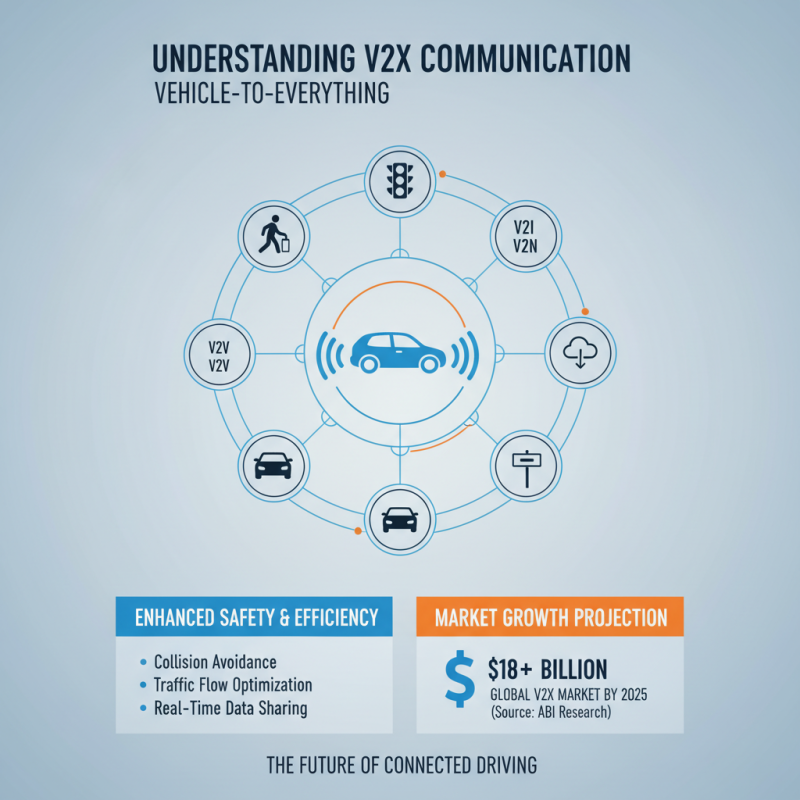
V2X communication stands for vehicle-to-everything communication. It is a crucial technology for enhancing vehicle safety and efficiency. According to a report by ABI Research, the global V2X market is projected to exceed $18 billion by 2025. This growth underscores the importance of reliable communication links in modern automotive systems.
High-frequency communication PCB plays a vital role in V2X applications. These specialized circuit boards provide the necessary bandwidth and minimize latency. Reports from the IEEE have highlighted that low-latency communication can significantly reduce accident rates. With V2X, vehicles share information about speed, direction, and road conditions. This data enables real-time decision-making, increasing overall road safety.
However, challenges exist in V2X implementation. Interference and signal reliability are major concerns. The environment can impact communication quality, leading to delays in critical information exchange. OEM wholesale manufacturing of high-frequency communication PCBs can address these issues. Advanced materials and design techniques improve durability and performance. The focus must remain on continuous innovation to meet the demands of increasingly complex vehicle communication systems.
Overview of OEM High-Frequency PCBs and Their Functionality
OEM high-frequency PCBs play a crucial role in vehicle communication technologies, specifically for the Vehicle-to-Everything (V2X) framework. These printed circuit boards are designed to handle high frequencies, which are essential for stable and efficient wireless communication between vehicles and their surroundings. According to a report by MarketsandMarkets, the global V2X market is projected to grow from USD 1 billion in 2021 to over USD 6 billion by 2026, highlighting the increasing demand for reliable components like high-frequency microwave communication boards.
In terms of functionality, these PCBs must not only transmit data quickly but also maintain a low level of interference. This capability is critical as vehicles communicate with infrastructure, other vehicles, and even pedestrians. A reliable high-frequency PCB enhances the signal clarity and response time, impacting safety and navigation significantly. However, challenges remain in achieving optimal performance. Factors such as material quality, layer count, and design complexity can affect the overall efficiency of these circuits. This indicates a need for continuous innovation and testing to meet industry standards.
Recent advancements suggest that manufacturers are focusing on reducing losses and enhancing heat dissipation in their PCB designs. Yet, achieving perfect efficiency remains a target rather than a reality. As the V2X landscape evolves, ongoing research will be necessary to refine and innovate high-frequency microwave communication boards further.
Why Choose OEM Wholesale High-Frequency PCB for Vehicle Communication V2X? - Overview of OEM High-Frequency PCBs and Their Functionality
| Dimension |
Specification |
Functionality |
Advantages |
| Frequency Range |
30 MHz - 6 GHz |
Supports V2X communication standards |
Improved data transfer rates |
| Material |
FR-4, Rogers |
High dielectric constant |
Enhanced thermal stability |
| Layer Count |
4 Layers |
Complex circuit design capabilities |
Compact size for automotive applications |
| Impedance |
50 Ohms |
Matching for RF applications |
Reduced signal loss |
| Applications |
Automotive, IoT |
Vehicle-to-Everything communications |
Supports smart transportation systems |
Advantages of Using OEM Components in Vehicle Communication Systems
In the rapidly evolving world of vehicle communication systems, OEM components play a pivotal role. They offer reliability and superior performance in High-Frequency Communication Circuit Boards. These boards are integral for V2X (Vehicle-to-Everything) communication, promoting safety and seamless connectivity on the road.
The use of OEM components ensures high compatibility and durability. These parts undergo rigorous testing, which enhances overall system performance. Engineers often find that OEM High-Frequency Communication Circuit Boards lead to fewer integration issues. Any observed delays in communication can reflect poorly on a vehicle's reliability. That’s why OEM choices are often preferred.
Tip: Always consider the long-term benefits of using OEM parts. Cost savings might be tempting, but durability and reliability are crucial.
Moreover, OEM components represent the latest technology, making them vital for innovation. Upgrading to OEM High-Frequency Communication Circuit Boards can improve data transfer speeds significantly. Yet, some may overlook the importance of timely updates and maintenance in their systems. Ignoring these can disrupt communication capabilities.
Tip: Regular checks and updates can enhance system reliability. This simple step can prevent issues before they escalate.
Key Features of High-Frequency PCBs for V2X Applications
High-frequency printed circuit boards (PCBs) are essential for vehicle communication in V2X applications. These boards enhance data transfer rates and improve signal integrity, crucial for real-time communication between vehicles and infrastructure. Designed to operate at higher frequencies, they minimize signal loss and support larger amounts of data, which is vital for safety and operational efficiency.
The material used in high-frequency PCBs significantly impacts performance. Advanced substrates help in maintaining lower dielectric losses, which leads to better signal quality. Additionally, precise impedance control is critical. Any deviation can result in poor performance and connectivity issues. In V2X systems, reliability is non-negotiable, as communication failures can have dire safety consequences.
High-frequency PCBs can be complex, and challenges often arise during manufacturing. It is essential to address issues like thermal management and layer stacking effectively. Mistakes in these areas can result in malfunctioning boards. Engineers must rigorously test and validate designs before deployment. Engaging with experienced manufacturers can help navigate these complexities, ensuring that the PCBs meet the specific demands of V2X technology.
Performance Comparison of High-Frequency PCBs for V2X Applications
Comparative Analysis: OEM vs. Aftermarket PCB Solutions
When considering PCB solutions for Vehicle Communication V2X,
OEM options stand out. These original equipment manufacturer products offer
significant advantages over aftermarket alternatives. OEM high-frequency PCBs are specifically designed for the unique demands
of vehicle communication. They ensure optimal performance and reliability, crucial for
Electric Vehicle Pcb applications.
Aftermarket solutions can be appealing due to lower costs. However, these options often lack the precision
and quality control found in OEM products. Manufacturers may cut corners to reduce expenses, leading to potential failures in
critical systems. This inconsistency raises concerns about safety and longevity. Many users report issues with
aftermarket PCBs that OEMs would typically avoid. It’s something to consider when making your choice.
Lastly, compatibility is a vital factor.
OEM PCBs are engineered to fit seamlessly with vehicles and their components. They are tested rigorously, ensuring
they meet all standards. In contrast, aftermarket solutions may not always align perfectly, increasing the risk of
malfunction. This discrepancy can lead to performance issues down the line. Overall, when weighing the options,
OEM high-frequency PCBs deserve serious consideration.
Challenges in V2X Communication and How High-Frequency PCBs Address Them
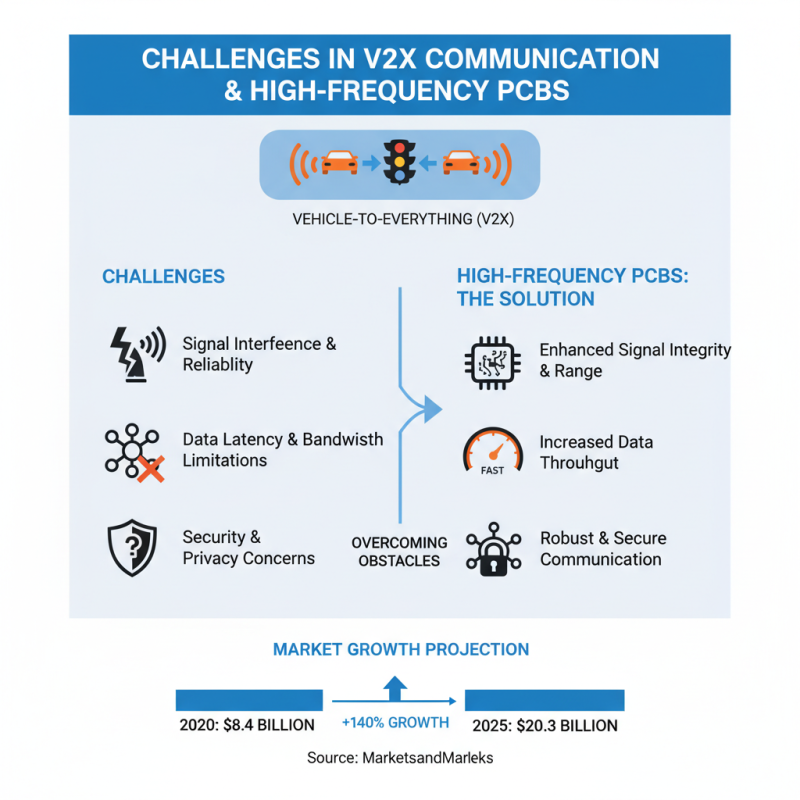
The challenges in V2X (Vehicle-to-Everything) communication are significant. High-frequency PCBs can play a crucial role in overcoming these obstacles. According to a recent report by MarketsandMarkets, the V2X market is projected to grow from $8.4 billion in 2020 to $20.3 billion by 2025. This growth reflects the increasing demand for reliable communication systems in vehicles.
One major challenge is signal interference. V2X communication requires accurate data transmission. High-frequency PCBs reduce noise and enhance signal integrity. They operate effectively in the 5.9 GHz frequency range, which is essential for clear communication in dense urban environments. Additionally, these PCBs can support advanced modulation schemes, leading to improved data rates and reduced latency. A report from Grand View Research highlights that latency reductions can significantly improve safety features in autonomous vehicles.
Another issue is durability. Vehicle environments are harsh, with vibrations, heat, and humidity. High-frequency PCBs are designed to withstand these conditions, offering resilience and reliability. A study from IPC indicates that PCBs with solid thermal management can enhance the overall performance of electronic components in vehicles. This improvement directly impacts the effectiveness of V2X communications, which are vital for safety and efficiency on the road.
Future Trends in Vehicle Communication Technologies and PCB Innovations
The future of vehicle communication technologies is rapidly evolving. High-frequency PCBs play a vital role in these advancements. As vehicles increasingly rely on V2X (Vehicle-to-Everything) communication, the demand for reliable PCBs grows. These components enable seamless data transmission between vehicles, infrastructure, and other road users, enhancing
safety and efficiency.
Investing in OEM wholesale high-frequency PCBs can be advantageous. These PCBs are designed to handle the demanding requirements of high-speed data exchanges. They ensure stable communication in various environments. However, the complexity of the technology poses challenges in production and quality assurance.
Ensuring compliance with industry standards is crucial.
Tips: When selecting PCBs, consider factors like signal integrity and thermal performance. Opt for manufacturers with proven
expertise in high-frequency designs. Additionally, assess the scalability of their solutions as your communication needs evolve. The right choice can significantly impact your vehicle's performance and reliability in a connected world.
Optimizing High-Performance Applications with 20-Layer Gold-Plated PCBs: Insights from Industry Data Reports on Advanced Design Trends
In the realm of high-performance applications, the evolution of printed circuit boards (PCBs) has been remarkably driven by innovations such as 20-layer gold-plated designs. The increasing demand for faster and more efficient electronic components necessitates a focus on advanced design trends that enhance signal integrity and thermal performance. Industry data reports indicate that multilayer PCBs, particularly those designed with high-frequency capabilities, are projected to see significant growth due to their ability to support sophisticated electronic devices in telecommunications, aerospace, and medical equipment sectors.
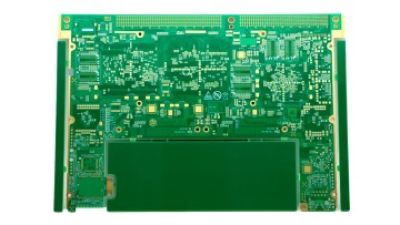
One standout example is a 20-layer gold-plated high-frequency PCB with a thickness of 2.4mm. Utilizing high-TG material, this PCB showcases cutting-edge features including through-hole design, thick copper layers, and advanced impedance control. The distinctive beveled edge design not only improves aesthetics but also enhances performance by reducing signal reflections. According to recent reports, the demand for such advanced multilayer PCB configurations is expected to grow by over 20% in the next five years, driven by a surge in IoT devices and high-speed data processing requirements.
Moreover, the construction of these high-frequency boards emphasizes efficiency in manufacturing processes, such as a streamlined single drilling and lamination technique that aids in maintaining optimal electrical properties. The use of pure high-frequency boards and a meticulous approach to drilling—down to a precise 0.2mm diameter—ensures that high-performance standards are met. With a gold-plated surface thickness of just 2μ", these PCBs not only promise exceptional conductivity but also longevity in demanding environments, exemplifying a perfect synergy between cutting-edge technology and practical application needs.
FAQS
: They are used in vehicle communication technologies, especially the Vehicle-to-Everything (V2X) framework.
They enhance data transfer rates and signal integrity, leading to better real-time communication between vehicles and infrastructure.
Issues like thermal management and layer stacking can lead to malfunctioning boards if not addressed properly.
Advanced substrates help reduce dielectric losses, ensuring better signal quality and performance.
They minimize noise, enhancing signal integrity, which is critical for accurate data transmission in V2X systems.
Any failure in communication can have severe safety consequences; thus, reliability in high-frequency PCBs is essential.
Manufacturers focus on reducing losses and improving heat dissipation, but achieving perfect efficiency is still a challenge.
Rigorous testing ensures that designs are validated before deployment, mitigating potential performance issues.
Yes, they are designed to endure vibrations, heat, and humidity, ensuring reliability in tough environments.
Ongoing research is necessary to refine high-frequency microwave communication boards as V2X technology evolves.
Conclusion
The article explores the significance of High-Frequency PCB for Vehicle Communication (V2X), highlighting its critical role in enabling efficient communication between vehicles and their surrounding infrastructure. V2X communication enhances road safety and traffic management, making it integral to modern automotive technology. The discussion encompasses the functionality of OEM high-frequency PCBs, emphasizing their superior performance compared to aftermarket alternatives while detailing the unique advantages they bring to vehicle communication systems.
Further, the article addresses the key features of these high-frequency PCBs that cater specifically to V2X applications, alongside a comparative analysis that illustrates the benefits of choosing OEM solutions over aftermarket counterparts. Additionally, it identifies the challenges faced in V2X communication and how high-frequency PCBs effectively tackle these issues. Finally, the piece looks ahead at future trends in vehicle communication technologies and innovations in PCB design, underscoring the ongoing evolution in this vital sector.