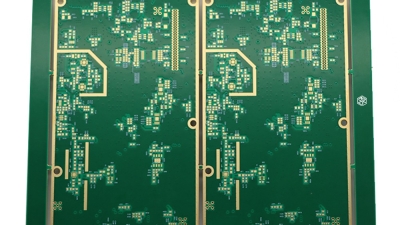
You know, with the demand for better communication networks just skyrocketing, we really can’t underestimate how important Telecom Circuit Design is. There’s this recent report from the International Telecommunication Union that says global internet traffic is set to jump by a whopping 26% every year! That really emphasizes the need for smart circuit design solutions to keep up with this booming demand.
 So, enter Shenzhen Rich Full Joy Electronics Co., Ltd. – this company is kind of a trailblazer in the game, proudly recognized as a national high-tech innovative enterprise. They're all about advanced telecom tech. They focus not just on crafting top-notch circuit designs but also play a key role in nurturing innovative telecom solutions right here in China. In this blog, we’re going to dive into the challenges we face with telecommunication circuit design and how some clever strategies can really open up new possibilities in this ever-evolving industry.
Understanding the Importance of Selecting Quality Telecommunications Circuit Suppliers
Choosing the right telecommunications circuit suppliers is super important for making any telecom project successful. You know, a report from the International Telecommunication Union reveals that over 80% of network failures in telecom can actually be traced back to selecting the wrong suppliers and circuit designs. Pretty eye-opening, right? So, it’s essential to take your time and really vet those suppliers to make sure they provide reliable, top-notch components.
When you’re picking a telecommunications circuit supplier, you should definitely think about a few key things—like their past performance, how well they comply with international standards, and whether they’re committed to innovation. Oh, and speaking of growth, there’s this interesting research from Market Research Future that predicts the global telecommunications circuit market is likely to grow around 6.5% each year from 2021 to 2027. That’s largely fueled by new tech advancements and the growing need for solid communications infrastructure. Partnering with suppliers who are leading the charge in those advancements can make a real difference in the reliability and efficiency of your telecom systems.
Plus, companies that focus on quality when picking their suppliers often see happier customers and lower operational costs. A study by Deloitte found that businesses engaging in strategic collaborations with their suppliers can cut procurement costs by as much as 25% and enjoy better service quality. This just goes to show the strong link between supplier quality and overall performance in the telecommunications world.
Key Technical Specifications that Impact Circuit Design Effectiveness
So, when we dive into telecommunication circuit design, there are a few key specs that really impact how well these systems work, you know? One of the big ones is bandwidth. It’s what defines how much data a circuit can handle. According to the Telecommunications Industry Association (TIA), if you design a circuit with higher bandwidth, you're looking at the ability to support multi-gigabit speeds, which is super important for things like 5G networks and streaming high-def videos. Interestingly, circuits boasting more than 1 GHz in bandwidth can actually boost data performance by up to 40%, making them just right for today’s telecommunication needs.
Then there's the signal-to-noise ratio (SNR), which plays a huge role in how clear and reliable our communication really is. A recent report from the International Telecommunication Union (ITU) pointed out that circuits with an SNR over 30 dB can drastically cut down error rates. This means better data integrity, even when the environment isn’t cooperating. And, oh, we can’t forget about line impedance! It’s super important for keeping signal reflections low—circuits designed with a matched impedance of 50 ohms are known for optimizing power transfer and boosting overall performance, especially in RF applications. By zeroing in on these technical specs, engineers can really take circuit design to the next level, paving the way for stronger and more reliable telecommunication systems.
Unlocking Best Telecommunication Circuit Design with Advanced Technical Specifications and Proven Strategies - Key Technical Specifications that Impact Circuit Design Effectiveness
| Specification |
Impact on Circuit Design |
Recommended Value |
Measurement Method |
| Frequency Range |
Determines circuit response speed and signal propagation. |
1 MHz to 6 GHz |
Spectrum Analyzer |
| Impedance Matching |
Minimizes reflection and maximizes power transfer. |
50 Ohms |
Vector Network Analyzer |
| Signal Integrity |
Ensures reliable data transmission without degradation. |
|
Time Domain Reflectometer |
| Thermal Management |
Prevents overheating that can degrade performance. |
|
Thermal Camera |
| Power Supply Variation |
Affects stability and reliability of circuit operations. |
± 5% |
Multimeter |
Evaluating Supplier Credentials: What to Look For in Telecommunications Partnerships
When you're looking at potential telecom suppliers, you really can’t stress enough how important it is to
dig deep into their credentials. The strength of your partnership
really depends on how well you understand a supplier's experience in the field. You want to find vendors who
have a solid history of delivering top-notch telecommunications solutions.
That means checking out their portfolio, reading client testimonials, and taking a look at case studies that showcase
their ability to tackle projects like yours. Ideally, a supplier should flaunt their expertise with
relevant certifications, industry connections, and compliance with any
regulations that matter – all to make sure they can meet the technical needs of your project.
But it’s not all about technical skills; you’ve also got to consider the
financial health of your telecom partner. A supplier that's
struggling financially could run into issues getting projects finished on time or may not be able to provide ongoing
support when you need it. Asking for financial statements and looking into their ability to invest in
R&D can give you a good idea of their long-term stability.
And let’s not forget about company culture – seeing if their values line up with yours can make a
huge difference. When both sides have a shared vision, it really
boosts collaboration and sparks innovation, which is what you want for successful project outcomes.
Best Practices for Negotiating Contracts with Telecommunication Providers
Negotiating contracts with telecom providers? Yeah, it can feel super overwhelming at times! But trust me, if you follow some best practices, you can totally get a deal that works for your business. First off, doing your homework is crucial before diving into those negotiations. You really want to know what kinds of services and pricing options different providers are offering. This knowledge gives you the upper hand to make smart choices. Plus, keeping up with the latest tech trends in telecommunications can actually help you snag better terms that fit your specific needs.
Communication is everything during this whole process. Be upfront about what you need and what your expectations are—don’t hold back on asking questions if something seems a little hazy. Go into the negotiation with a mindset that’s all about collaboration; after all, you’re aiming for a win-win situation here. Building a good rapport can make discussions flow more smoothly, making it easier to reach contract terms that work well for both sides. And hey, don’t forget to comb through the fine print! Look out for sneaky charges or conditions that could mess with your operations in the long run. By blending solid research with clear communication and a careful review of the contract, you can easily navigate the tricky waters of telecom agreements.
Proven Strategies for Optimizing Circuit Design and Supplier Collaboration
You know, in the world of telecom circuit design, working closely with suppliers is super important for making things work. When designers keep the lines of communication open and have real conversations with suppliers, it can seriously speed up the design process, cut down on lead times, and ultimately boost the quality of the final product. It’s all about building strong relationships—when you do that, you’re able to tap into their insights about the latest tech and materials. This can really help in coming up with some innovative solutions in your designs.
Now, if you want to optimize circuit design effectively, it’s really a mix of having solid technical specs and forging those strategic partnerships. When companies lean on the expertise of their suppliers, they can spot any potential hiccups early on in the design phase. This way, they can tweak specifications on the fly and dodge some pretty expensive revisions down the road. Plus, setting up collaborative platforms where everyone can share feedback and ideas makes for a more cohesive approach. It opens the door to creative strategies that not only tackle the current needs but also keep an eye on what’s coming next in telecom technology.
Case Studies: Success Stories in Effective Telecommunications Supply Chain Management
You know, in today’s busy world of telecommunications, getting
supply chain management right is super important if companies want
to deliver reliable services and stay ahead of the game. When we look
at some success stories, it’s clear there are some really cool
strategies out there that have changed the way telecoms operate. These
strategies not only help companies survive the ups and downs of the
market but actually thrive! For instance, using
advanced analytics in their
supply chain can really help
companies forecast what customers want, keep inventory levels just
right, and cut down on lead times. It’s all about using data to make
things run smoother – like fine-tuning their procurement and
distribution networks for better efficiency overall.
Take, for example, this leading telecom provider that totally revamped
their supply chain to handle
growing customer expectations and the unpredictability of the market.
They started working closely with their suppliers and jumped on
real-time tracking systems, which
really stepped up their game in terms of transparency and
responsiveness. Because of these moves, they managed to quickly adapt
to unexpected challenges, like those crazy global events we all know
about, which kept their service delivery smooth and uninterrupted.
These case studies really drive home just how vital
resilience is in the
telecom supply chain, and they show us how out-of-the-box thinking can
lead to lasting success in a field that’s always changing.
Maximize Efficiency and Reliability with Layer High - Performance PCBs: An In-Depth Look at FR-4, TG170, and Advanced Solutions
The quest for higher efficiency and reliability in electronic circuits has led to significant advancements in PCB technology, particularly with the introduction of 8-layer designs utilizing FR-4 and TG170 materials. These materials offer an optimal combination of electrical insulation, mechanical strength, and thermal stability, making them perfect for demanding applications. This groundbreaking approach ensures that PCBs can withstand the rigors of modern electronics, especially in fields such as 5G communication infrastructure and aerospace technology.
A standout feature of these 8-layer PCBs is the innovative metal edge design, which not only enhances the mechanical resilience against vibrations and impacts but also acts as an effective electromagnetic shield. This feature is crucial in today’s complex electromagnetic environments, allowing for stable operation without signal interference. The addition of an ENIG surface finish further elevates performance by providing robust corrosion resistance and exceptional solderability, ensuring reliable connections for various electronic components.
Moreover, with precise manufacturing standards that include a minimum via size of 0.2mm and a minimum line width/space of 8/8mil, these PCBs support high-density wiring, enabling greater integration of components. The careful control of impedance and copper thickness guarantees efficient signal transmission and stable power supply, making these advanced PCBs a dependable choice for high-end medical equipment and more. This remarkable achievement in PCB technology symbolizes a new era in electronic design, promising enhanced performance and longevity for tomorrow’s high-tech products.
FAQS
: Selecting quality telecommunications circuit suppliers is crucial because over 80% of infrastructure failures in telecom networks can be traced back to poor supplier selection and circuit design, impacting the success of telecommunication projects.
Factors to consider include the supplier's historical performance, compliance with international standards, commitment to innovation, and their ability to keep pace with advancements in technology.
The global telecommunications circuit market is projected to grow at a CAGR of 6.5% from 2021 to 2027, driven by technological advancements and increased demand for robust communications infrastructure.
Organizations that focus on quality in supplier selection typically see enhanced customer satisfaction, reduced operational costs, and can achieve up to 25% lower procurement costs through strategic supplier collaboration.
Best practices include conducting thorough research on services and pricing, maintaining clear communication of requirements, fostering a collaborative approach, and carefully reviewing the contract's fine print for hidden charges.
Advanced analytics can help organizations forecast demand more accurately, optimize inventory levels, and reduce lead times, leading to enhanced efficiency in procurement and distribution networks.
One successful strategy was restructuring the supply chain approach to include close collaboration with suppliers and real-time tracking systems, which improved transparency and responsiveness to customer demands and market changes.
Adapting to unforeseen disruptions is essential for minimizing downtime and ensuring uninterrupted service delivery, which directly influences customer satisfaction and business performance.
Communication is vital in the negotiation process as it helps clarify requirements and expectations, fostering a collaborative environment that can lead to more favorable contract terms.
Organizations can enhance operational efficiency by combining thorough research, open communication, and meticulous contract reviews to navigate complexities and avoid unfavorable terms.