Lately, you’ve probably heard a lot about Millimeter Wave Radar tech — it’s really shaking things up across a bunch of different fields. These advanced radar systems are pretty amazing because they can produce high-res images and measure distances with great accuracy. That’s a game changer, especially in areas like car safety and automation, healthcare, and even building smarter cities. The cool thing about Millimeter Wave Radar is that it can handle tough environments and actually penetrate different materials better than older radar systems. That’s why they’re quickly becoming a go-to alternative.
As industries look for smarter ways to work more efficiently and stay safe, Millimeter Wave Radar is climbing in popularity — mainly because it’s so versatile and reliable. It’s not just about helping self-driving cars detect obstacles and navigate in real-time; it’s also making waves in precision farming, environmental stuff, and medical diagnostics. Basically, organizations tapping into this tech can get super precise data, which helps them make smarter decisions and get better results all around.
In this overview, we’ll check out some of the latest milestones in Millimeter Wave Radar tech and what they mean for different industries. Understanding how this stuff is changing the game will give us a clearer idea of what’s coming next — kind of like a sneak peek at the future of innovation in our connected world.

Overview of Millimeter Wave Radar Technology
Millimeter wave radar technology operates within the frequency range of 30 GHz to 300 GHz, positioning it as an essential tool in many modern applications. This technology leverages high-frequency electromagnetic waves, which can penetrate various materials and provide high-resolution imaging and detection capabilities. This makes millimeter wave radar particularly effective in environments where traditional radar and imaging technologies struggle, such as in adverse weather conditions or through obstacles like foliage or building materials.
The increased bandwidth afforded by millimeter wave frequencies enables finer spatial resolution and improved object detection. In various sectors, including automotive, aerospace, and security, this translates to enhanced safety features, better navigation systems, and more accurate surveillance capabilities. As the technology continues to evolve, the potential applications expand, paving the way for innovations such as autonomous vehicles, smart cities, and advanced healthcare monitoring systems, all benefiting from the reliable and precise data that millimeter wave radar can provide.
The Best Millimeter Wave Radar Technologies Transforming Modern Applications
This chart demonstrates the average adoption rates of various millimeter wave radar applications across different industries. The data is collected from industry reports and surveys reflecting the current trends in technology application.
Key Features and Advantages of Millimeter Wave Radar
Millimeter wave radar technology has emerged as a transformative force across various sectors, thanks to its unique features and advantages. These radar systems operate in the frequency range of 30 GHz to 300 GHz, allowing them to achieve high-resolution imaging and precise distance measurement. According to a report by Market Research Future, the global millimeter wave technology market is projected to grow at a CAGR of 30.6% from 2020 to 2027, indicating a significant uptick in adoption across industries ranging from automotive to telecommunications.
One of the key features of millimeter wave radar is its ability to penetrate various materials, including fog, rain, and dust, which significantly enhances detection capabilities in adverse weather conditions. This feature is particularly beneficial for automotive applications, where safety and reliability are critical. In addition, millimeter wave radars can achieve high angular resolution due to their shorter wavelengths, enabling more accurate object detection and identification. This enhances the performance of advanced driver-assistance systems (ADAS) and autonomous vehicles, contributing to an expected increase in the automotive radar market, projected to reach $10.14 billion by 2025, according to a study by Technavio.
Moreover, millimeter wave radar systems exhibit low latency and high data transmission capabilities, making them ideal for applications in smart cities and industrial automation. Their ability to support high-bandwidth communications is essential for the realization of Internet of Things (IoT) solutions, which are becoming increasingly vital in modern infrastructure. The integration of these radar technologies not only improves operational efficiency but also aids in achieving robust data analytics and decision-making processes across various domains.
Applications of Millimeter Wave Radar in Automotive Industry
Millimeter wave radar technology is revolutionizing the automotive industry by enhancing safety and supporting advanced driver-assistance systems (ADAS). Operating at frequencies between 30 GHz and 300 GHz, this technology enables high-resolution imaging and precise distance measurement, which are crucial for functions such as adaptive cruise control, collision avoidance, and automated parking. With its ability to penetrate adverse weather conditions like fog, rain, and snow, millimeter wave radar offers a reliable solution for vehicle perception that ensures safer driving experiences.
Tips: When integrating millimeter wave radar into automotive designs, consider the placement of sensors to maximize coverage and minimize blind spots. Ensuring effective calibration and data fusion with other sensors, such as camera systems and lidar, can significantly improve overall performance and reliability.
As the automotive industry shifts towards greater automation, the role of millimeter wave radar will likely expand. Its ability to provide real-time data on the vehicle's surroundings contributes to the development of fully autonomous vehicles. By offering accurate detection of objects and enabling swift decision-making, this technology is set to become a cornerstone in the next generation of safe and efficient transportation systems.
Role of Millimeter Wave Radar in Consumer Electronics
Millimeter wave radar technology is gaining prominence in the consumer electronics sector, enhancing how devices interact with users and their environments. This technology operates in the frequency range of 30 GHz to 300 GHz, enabling it to detect objects with high precision and at great distances. In consumer electronics, its applications are manifold, from advanced automotive features like collision avoidance systems to innovative smart home devices that offer improved security and convenience.
One of the most significant advantages of millimeter wave radar in consumer electronics is its capability to operate effectively in various conditions, including low visibility scenarios. This reliability makes it ideal for applications such as gesture recognition, where users can control devices through motion without physical contact, thus elevating user experience. Additionally, the integration of this technology into health monitoring devices allows for non-invasive tracking of vital signs, further promoting user convenience and safety. As the demand for more intuitive and responsive electronic devices continues to rise, millimeter wave radar stands out as a transformative force in shaping the future of consumer electronics.
Advancements in Millimeter Wave Radar for Aerospace and Defense
Recent advancements in millimeter wave radar technology have significantly transformed the aerospace and defense sectors. This innovative radar technology operates within the frequency range of 30 GHz to 300 GHz, offering enhanced resolution and accuracy for various applications, including surveillance, target tracking, and collision avoidance. A report by MarketsandMarkets projects that the global millimeter wave radar market will reach USD 3.6 billion by 2026, growing at a compound annual growth rate (CAGR) of 27.5% from 2021. This rapid growth underscores the increasing demand for high-resolution sensing capabilities in defense operations.
In the context of aerospace and defense, millimeter wave radar systems provide crucial capabilities in both military and civilian aircraft. They enable interoperability and improved situational awareness, particularly in challenging environments where visibility is compromised. For instance, they are instrumental in enhancing the safety features of unmanned aerial vehicles (UAVs), where precision and the ability to detect obstacles are paramount. A study by the European Defence Agency has indicated that the integration of millimeter wave radar in reconnaissance missions has improved detection rates by up to 40%. As these technologies continue to evolve, their potential applications will undoubtedly expand, offering a myriad of opportunities for enhanced operational effectiveness in defense strategies.
Challenges in Implementing Millimeter Wave Radar Systems
Implementing millimeter wave radar systems presents several significant challenges that must be addressed to fully leverage their potential across various applications. One primary obstacle is the complexity of the technology itself. Millimeter wave radar operates at high frequencies, which requires precise engineering to minimize signal degradation and interference.
The compact design necessary for integrating these systems into smaller devices can also lead to thermal management issues, as higher frequencies generate more heat. Effective cooling solutions and thermal regulation become critical to ensure consistent performance and reliability.
Another challenge lies in the cost and accessibility of the technology. Developing and manufacturing millimeter wave radar systems can be resource-intensive, often requiring advanced materials and specialized components. This can limit the adoption of the technology, particularly among smaller companies or in less economically developed regions. Moreover, there is a steep learning curve associated with the deployment of these systems. Engineers and technicians must be well-versed in signal processing and radar theory, which can be daunting in terms of training and workforce development.
Addressing these challenges is crucial for the wider implementation of millimeter wave radar across industries such as automotive, telecommunications, and surveillance.
Future Trends and Innovations in Millimeter Wave Radar Technology
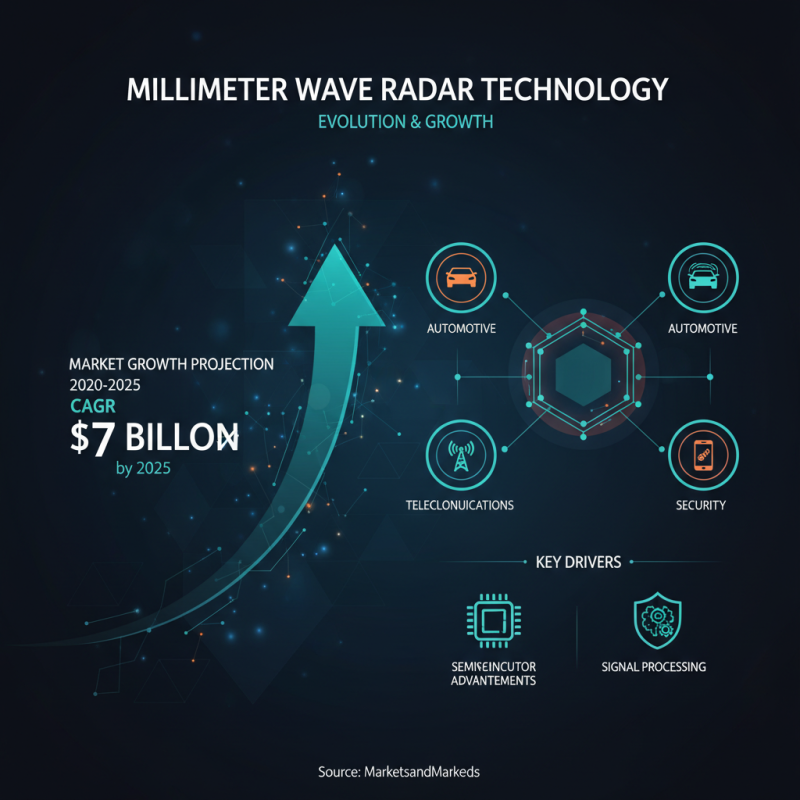
The landscape of millimeter wave radar technology is rapidly evolving, driven by its increasing applications across various sectors, including automotive, telecommunications, and security. Future trends indicate a significant growth trajectory for this technology, as reported by MarketsandMarkets, which projects the millimeter wave radar market to reach approximately $7 billion by 2025, growing at a CAGR of 25.5%. This surge is largely attributed to advancements in semiconductor technology and signal processing capabilities, enabling more precise and reliable data acquisition.
Innovations in millimeter wave radar are also focusing on the integration of artificial intelligence (AI) to enhance system performance. By incorporating machine learning algorithms, these systems can analyze vast amounts of data in real-time, improving detection accuracy and operational efficiency. An analysis by ResearchAndMarkets highlights that the demand for advanced sensing technologies, such as mmWave radar, is expected to witness a substantial increase in autonomous vehicle development, with a projected market size exceeding $3 billion by 2026. This trend underscores the pivotal role of millimeter wave radar in shaping the future of smart transportation and automation across various industries.
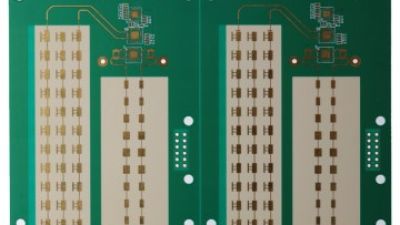
Exploring the Impact of Rogers Microwave RF Automotive Radar PCB on Next-Gen Vehicle Safety: Insights from Industry Reports
The automotive industry is witnessing a transformative shift with the integration of advanced microwave radar technologies, particularly the use of high-frequency radar boards like Rogers RO3003™. These PCB solutions are vital for enhancing vehicle safety features, such as adaptive cruise control, collision avoidance, and automated emergency braking. According to recent industry reports, the demand for automotive radar systems is projected to grow significantly, with estimates indicating a market expansion worth over $30 billion by 2027. This growth is driven by the increasing need for safety regulations and the rising awareness among consumers regarding vehicle safety.
Rogers RO3003™ offers unique properties suited for both high-performance radar systems and lightweight automotive applications. Its low loss characteristics and high thermal stability allow for superior signal integrity, which is essential for maintaining reliable performance in demanding automotive environments. Reports from leading industry analysts highlight that the adoption of radar technologies in vehicles can reduce accident rates by up to 40%, thereby reinforcing the importance of incorporating robust PCBs like Rogers RO3003™ in next-generation automotive designs.
Furthermore, as automakers continue to innovate toward fully autonomous vehicles, the role of reliable radar systems becomes even more critical. Current insights suggest that vehicles equipped with advanced radar systems can achieve improved situational awareness, enabling safer navigation under diverse driving conditions. The industry’s pivot towards these sophisticated technologies underscores a commitment to enhancing vehicle safety and paving the way for a more secure future in transportation.
FAQS
: Millimeter wave radar technology operates in the frequency range of 30 GHz to 300 GHz, enabling high-resolution imaging and precise distance measurement.
Millimeter wave radar can penetrate materials like fog, rain, and dust, significantly enhancing detection capabilities and improving safety in applications such as automotive systems.
Its high angular resolution and accurate object detection capabilities enhance the performance of ADAS and autonomous vehicles, improving overall safety and reliability.
The market is projected to reach approximately $7 billion by 2025, growing at a CAGR of 25.5%, driven by advancements in semiconductor technology and signal processing.
Innovations are focusing on incorporating machine learning algorithms to analyze vast amounts of data in real-time, improving detection accuracy and operational efficiency.
With low latency and high data transmission capabilities, it supports IoT solutions essential for operational efficiency and robust data analytics in modern infrastructure.
The technology is crucial for advanced sensing capabilities, with the market for such applications expected to exceed $3 billion by 2026, highlighting its importance in smart transportation.
Industries including automotive, telecommunications, and security are increasingly adopting this technology due to its unique features and benefits.
By integrating improved data transmission and real-time analysis, it aids in achieving robust decision-making processes across various domains.
The technology allows for precise and reliable data acquisition, which is essential for various applications, particularly in the context of automation and smart infrastructure.
Conclusion
Millimeter Wave Radar technology represents a significant advancement in various modern applications due to its unique features and advantages. This technology operates within the electromagnetic spectrum, offering high-resolution imaging and precise object detection capabilities. In the automotive industry, Millimeter Wave Radar enhances safety through sophisticated driver-assistance systems, while in consumer electronics, it enables more responsive and efficient smart devices. Furthermore, the aerospace and defense sectors benefit from its ability to perform under challenging conditions.
Despite its numerous advantages, the implementation of Millimeter Wave Radar systems faces challenges, including cost and integration complexities. However, ongoing research and development indicate a promising future with innovations aimed at overcoming these obstacles. As the technology continues to evolve, it is poised to play a pivotal role in transforming applications across various industries, paving the way for enhanced safety, connectivity, and efficiency.