

What Is a Flex PCB?
Flex PCBs, or flexible printed circuit boards, are ultra-thin, bendable boards designed for tight, compact, and irregular spaces.
✅ Need to reduce weight and save space in your product? Flex PCBs are the answer.
What Is a Flex PCB?
A Flex PCB is made from flexible insulating materials like polyimide or polyester films, supporting copper layers for circuitry. They bend and twist during use—unlike traditional rigid PCBs.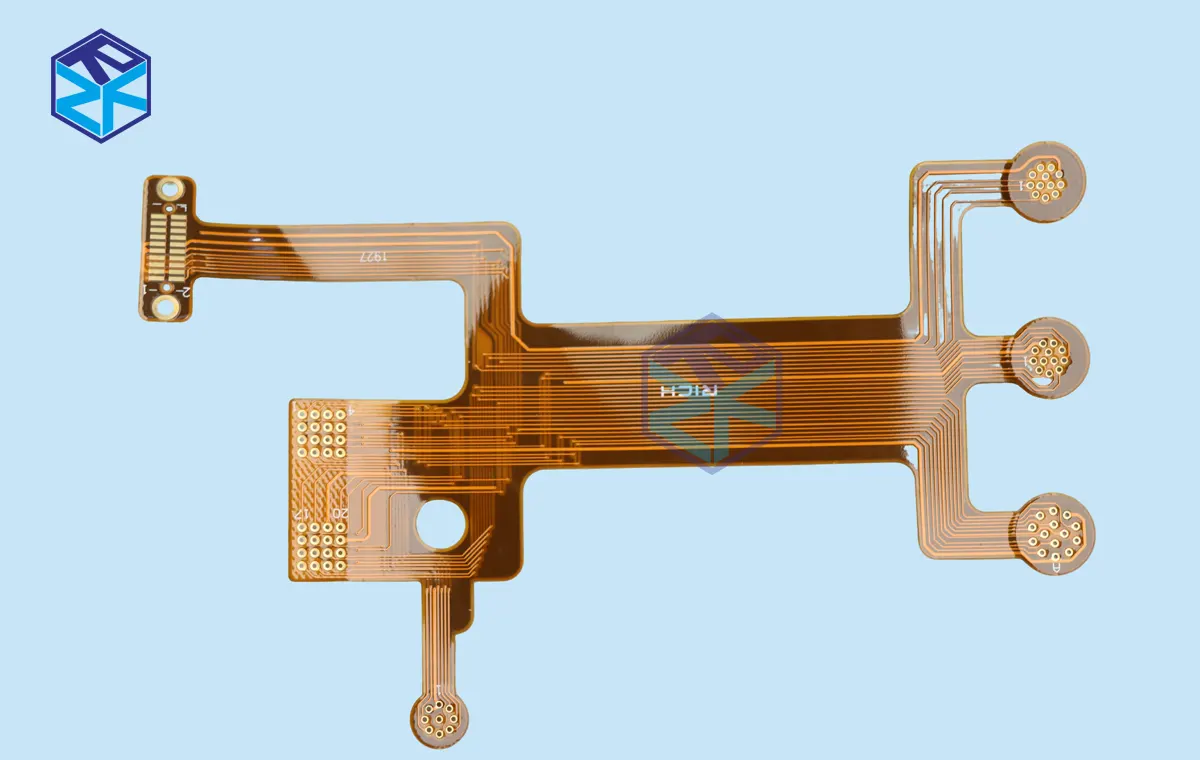
Think of Flex PCBs as the backbone of foldable phones, wearable tech, or lightweight satellites.
- ·Flexible structure (dynamic or static)
- ·Lightweight and thin profile
- ·High density interconnect capabilities
- ·Designed for 3D assembly spaces
Internal Structure of a Flex PCB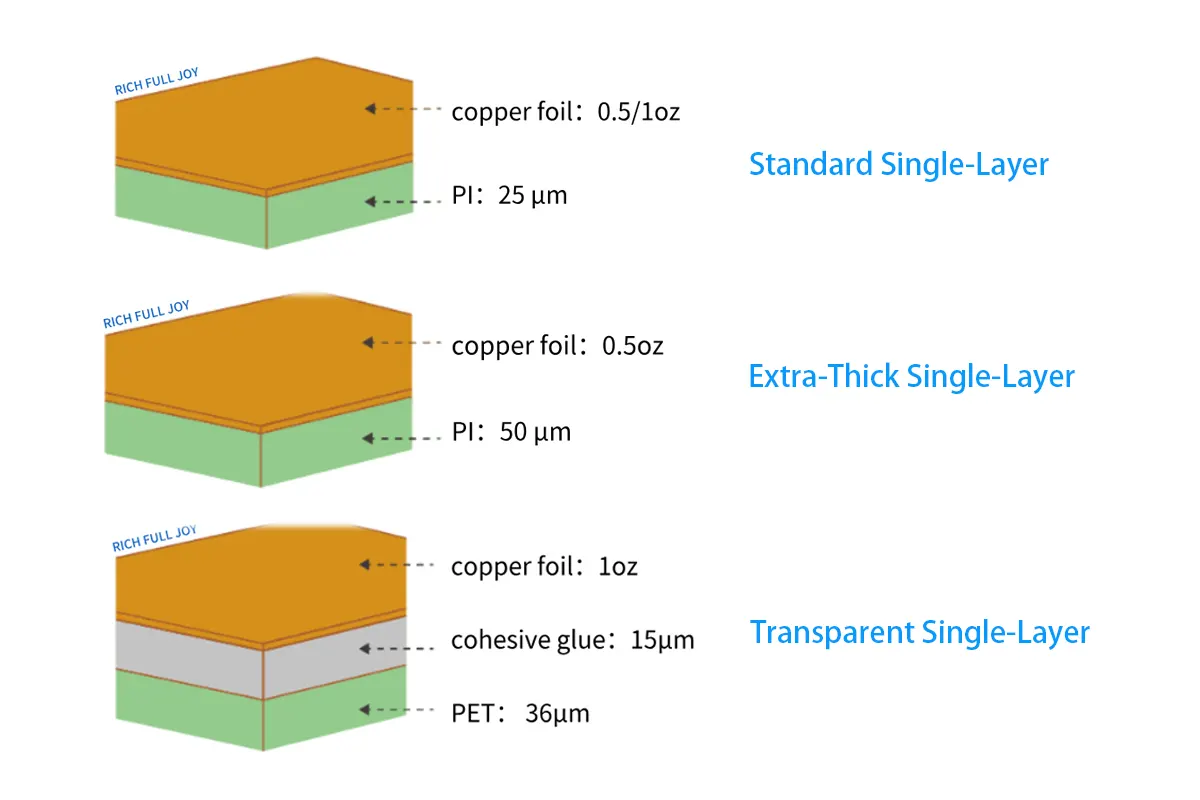
| Layer | Description |
|---|---|
| Base Film | Flexible substrate (Polyimide or PET) |
| Adhesive Layer | Binds copper foil to substrate |
| Copper Foil | Conductive layer for signal and power |
| Coverlay | Protective insulation against moisture and oxidation |
| Stiffener (Optional) | Mechanical support in connector areas |
🛠️ Our engineers support single-sided, double-sided, and multilayer flex designs.
Common Applications of Flex PCBs
| Industry | Application Example |
|---|---|
| Consumer Electronics | Foldable phones, cameras, smartwatches |
| Automotive | Airbag systems, dashboard electronics |
| Medical Devices | Hearing aids, endoscopy tools, wearable ECGs |
| Aerospace | Satellites, avionics modules, lightweight connectors |
💡 Flex PCBs help reduce connectors, cables, and solder joints—enhancing reliability in harsh environments.
Why Choose Flex PCBs?
- ✅ Space-saving design
- ✅ Reduced weight for portable devices
- ✅ Enhanced mechanical flexibility
- ✅ High reliability under dynamic stress
- ✅ Better thermal dissipation
- ✅ Fewer interconnects → Lower failure rate
🧭 What's Next?
Learn how to design and implement a high-performance flexible circuit:
🙋 Frequently Asked Questions (FAQs)
Q1: Are Flex PCBs suitable for dynamic bending applications?
A: Yes. Dynamic Flex PCBs are specially designed to withstand repeated bending, commonly used in hinges or wearable devices.
Q2: How thin can a Flex PCB be?
A: Flex PCBs can be manufactured as thin as 0.1mm (4 mils), depending on your application.
Q3: Can I combine Flex and Rigid PCBs?
A: Absolutely. A Rigid-Flex PCB combines rigid and flexible layers for advanced design needs. Learn more →
Explore More on Flex PCB Design & Manufacturing
- ·Flex PCB Manufacturing & Assembly Services – Comprehensive overview of production process and capabilities.
- ·Flex PCB Design Guide – Best practices for layout, stack-up, and impedance control.
- ·Flex PCB Cost & Quotation Factors – Understand cost drivers and how to optimize your budget.
- ·Flex PCB Material Selection – Insights into LCP, PI, adhesive types, and copper foils.
- ·Flex PCB vs Rigid-Flex: Which One to Choose? – Technical and cost comparison for better decision-making.
🌐 Trusted Resources & Industry Standards
- ·IEEE Standards for High-Speed PCB Design – Reference for signal integrity and impedance guidelines.
- ·IPC-6013 Standard for Flexible Circuits – Qualification and acceptance criteria for flex circuits.
- ·Prismark Market Research – Forecasts and insights into the flexible electronics market.