
Leave Your Message
-
E-mail
-
Whatsapp
-
Message
Explore our precision-engineered PCB products designed for autonomous vehicle sensor systems and high-frequency powertrain applications.
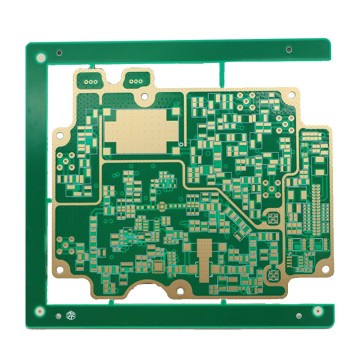
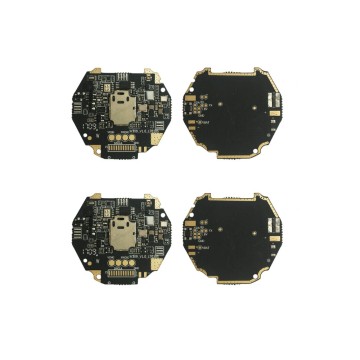
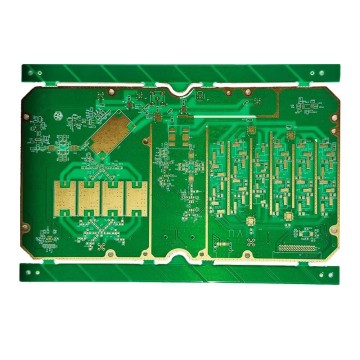
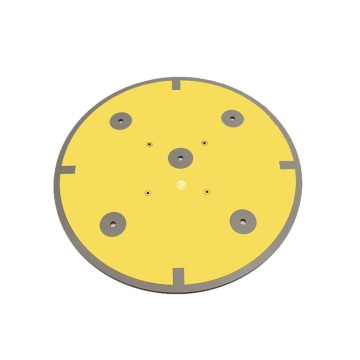
The global autonomous vehicle market is reshaping PCB design requirements — demanding higher frequencies, tighter tolerances, and greater thermal resilience.
The global autonomous driving PCB market is projected to surpass $12 billion by 2030, driven by rapid electrification and L3–L5 autonomous system deployment across passenger and commercial vehicles.
Modern autonomous vehicles integrate LiDAR, millimeter-wave radar, ultrasonic sensors, and cameras. Each requires dedicated high-frequency, low-loss PCBs operating reliably at 24 GHz to 79 GHz frequency bands.
EV powertrain systems demand PCBs capable of handling high-voltage (400V–800V), high-current signals with superior thermal management, driving widespread adoption of metal-core and ceramic-based substrates.
Staying ahead of the curve: the innovations shaping the future of autonomous driving sensor PCBs.
Rogers RO4350B and RO4003C materials are becoming the industry standard for automotive radar PCBs, offering dielectric constants as low as 3.48 with minimal signal loss, critical for 77 GHz ADAS radar modules used in adaptive cruise control and collision avoidance systems.
Embedding passive and active components directly into PCB substrates reduces form factor and improves signal integrity — a key trend for compact LiDAR processing boards and camera-based perception modules in autonomous platforms.
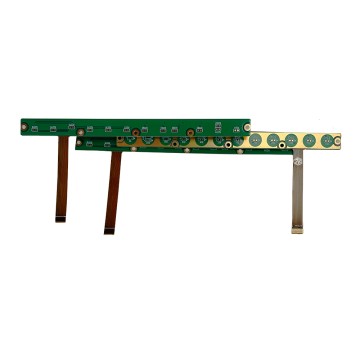
Rigid-flex PCBs are increasingly used in autonomous vehicle sensor assemblies to save space, reduce connectors, and improve vibration resistance — essential in harsh automotive environments where reliability is non-negotiable.
EV powertrain PCBs now integrate thermal vias, metal-core substrates, and advanced solder mask plug-hole technologies to dissipate heat from high-power switching circuits, ensuring stable performance across wide temperature ranges (-40°C to +150°C).
Machine learning tools are being integrated into PCB design workflows to auto-optimize trace routing, impedance control, and EMI shielding for complex multi-layer autonomous driving sensor boards — dramatically reducing time-to-market.
Automotive PCBs for ADAS and autonomous systems must comply with ISO 26262 ASIL-D safety standards. Redundant circuit design, fail-safe power management, and rigorous IPC-A-610 inspection protocols are now baseline requirements for powertrain sensor PCBs.
How powertrain PCBs enable the full spectrum of autonomous driving sensor systems across real-world deployments.
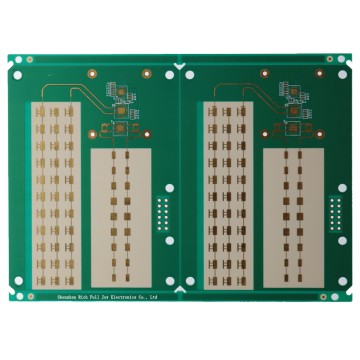
Millimeter-wave radar modules rely on Rogers-based high-frequency PCBs with controlled impedance and metal edge shielding to achieve accurate object detection at distances up to 250 meters — the backbone of Level 3+ autonomous driving.
LiDAR point-cloud processing requires ultra-fast signal processing PCBs with 25 Gbps differential signal capability, back-drilled vias for signal integrity, and multi-layer designs up to 16+ layers to handle real-time 3D environment mapping.
High-resolution camera systems for lane detection and traffic sign recognition use high-density interconnect (HDI) PCBs with fine-pitch BGA components, requiring precise impedance control and EMI shielding to maintain image fidelity at high vehicle speeds.
EV powertrain BMS boards manage cell balancing, state-of-charge monitoring, and thermal protection across 400V–800V battery packs. These PCBs demand high-voltage isolation, FR-4 TG170 substrates, and robust copper pours for current handling.
High-power IGBT/SiC inverter PCBs for EV drive systems require heavy copper layers (up to 6 oz), thermal management vias, and metal-core substrates to handle switching frequencies up to 100 kHz with minimal power loss and maximum efficiency.
V2X communication modules operating at 5.9 GHz require RF PCBs with low-loss dielectrics, precision antenna trace design, and ENIG surface finish to ensure reliable low-latency communication between vehicles, infrastructure, and cloud systems.
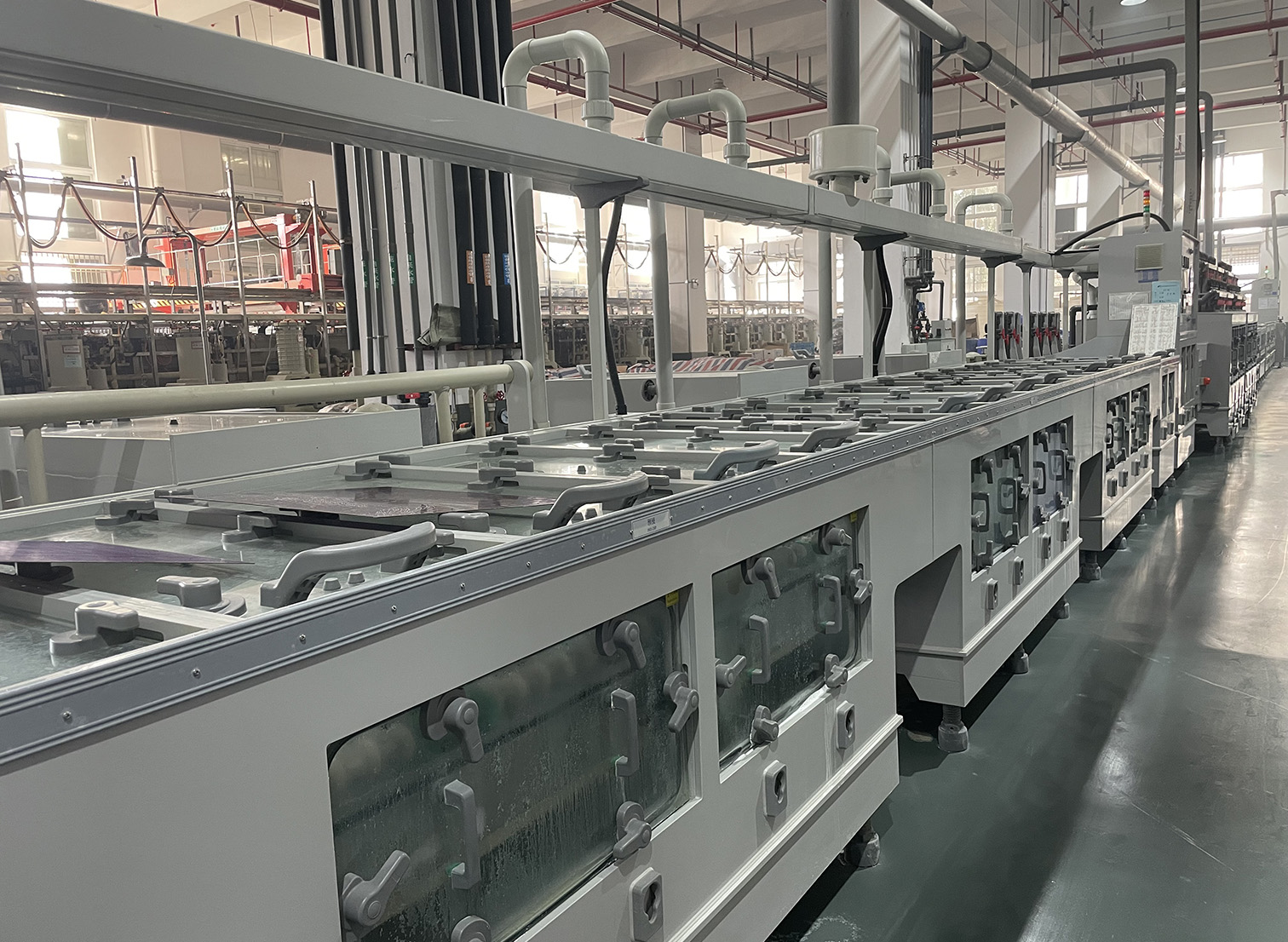
Over 20 years of PCB R&D, design, and production excellence. With a team of over 800 design engineers striving for perfection, our service network has spread across the globe — delivering powertrain PCB solutions that power the future of autonomous mobility.

As a company involved in the development and design of multiple scientific research products, our PCBs are widely applied in aviation, aerospace, automotive electronics, medical devices, industrial control, mobile terminals, servers, smart homes, AI applications, new energy, mini LED, and testing instruments.
We maintain a high-quality, highly capable technology R&D team, adhering to the development concept of high-end brands and products, serving global customers. Our products are exported to regions worldwide.
We continue to lead in the production of small batches, multiple varieties, high-difficulty, and high-precision PCBs. All products strictly adopt international IPC standards for production and inspection, with 24-hour high-quality one-on-one service.
We uphold the spirit of craftsmanship to build intelligent manufacturing — leading the industry with technology and driven by innovation.
Every powertrain PCB is manufactured with meticulous attention to detail, from impedance-controlled routing to resin-plugged via finishing — ensuring zero-defect performance in autonomous driving environments.
We continuously invest in R&D to stay ahead of emerging PCB technologies — from SiC-compatible high-power substrates to AI-assisted design automation for next-generation ADAS sensor boards.
With complete sets of advanced automatic production and testing equipment and a global distribution network, we deliver consistent quality and rapid turnaround to autonomous driving OEMs and Tier-1 suppliers worldwide.
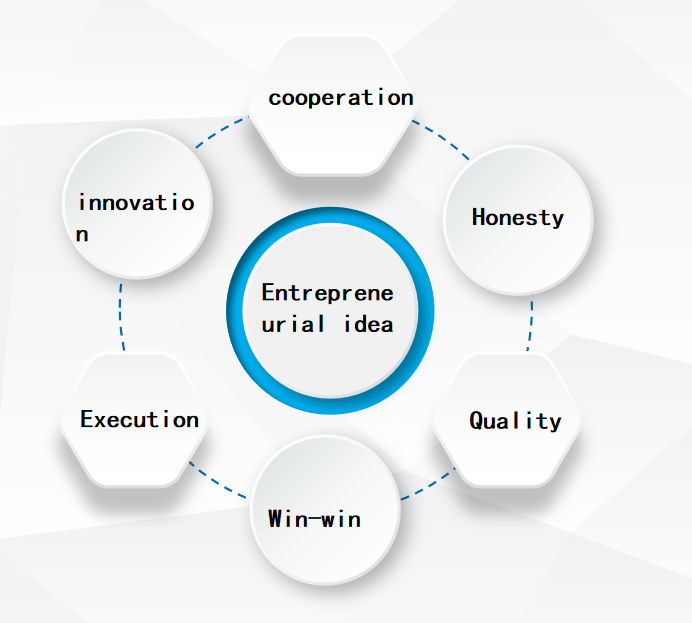
Integrity casts quality.
Innovation leads the future.
Superior quality and excellent service meet clients' needs and ideas — helping them win the market and achieve success. We strive for excellence and aim to become a recognized leader in the autonomous driving PCB industry, continuously strengthening our core competitiveness and establishing a leading position across all application fields.
Comprehensive high-frequency and high-reliability PCB solutions for every autonomous driving sensor application.
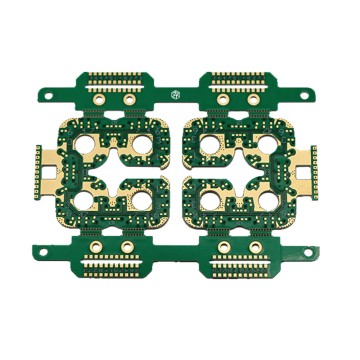
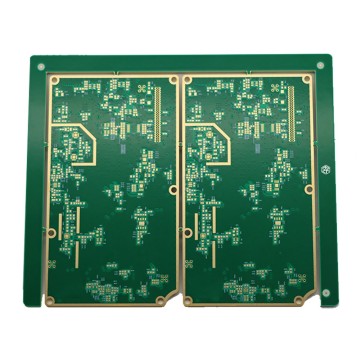
Partner with our team of 800+ engineers for custom powertrain PCB solutions — from prototype to mass production, built to the highest automotive standards.
Get a Custom PCB Quote →