
Exploring New Horizons in HDI Design: 3D Packaging and Heterogeneous Integration
In the current era of rapid development of electronic technology, 3D packaging and heterogeneous integration technologies are gradually becoming key transformative forces in the HDI design field, opening up a brand - new design perspective for HDI design engineers. As professionals in the HDI field, deeply understanding and skillfully applying these emerging technologies are crucial for creating high - performance and high - integration electronic systems.

3D Packaging: Breaking through the Traditional Stereoscopic Layout
Research and Application of Vertical Interconnection Technology
In 3D packaging, vertical interconnection is the core to achieve efficient communication between different chips or between chips and the substrate. Among them, the Through - Silicon Via (TSV) technology is particularly crucial. HDI design engineers need to precisely control the size, pitch, and depth of TSVs. Smaller TSV sizes can increase packaging density, but too small sizes may lead to increased drilling difficulty and resistance. Taking the 3D packaging of high - performance computing chips as an example, by optimizing the diameter of TSVs to 5 - 10μm and reasonably controlling their depth and pitch, the signal transmission rate can be increased while reducing signal delay and crosstalk. In addition, in the 3D packaging of multi - layer chip stacking, engineers need to plan the distribution of TSVs in different layers according to signal transmission requirements to ensure that signals can be accurately and efficiently transmitted between layers.
Heat Dissipation and Thermal Management Design
With the increase in chip integration, 3D packaging faces severe heat dissipation challenges. HDI design engineers should select high - thermal - conductivity materials for filling between chips and the substrate, such as using silicone grease or ceramic filling materials with high thermal conductivity to enhance heat conduction efficiency. At the same time, designing a reasonable heat dissipation channel is crucial. In multi - layer chip packaging, a metal heat dissipation layer can be constructed inside the substrate, and TSVs can be used to guide the heat generated by the chips to the heat dissipation layer, and then dissipated through external heat dissipation devices. For example, in the 3D packaging design of the radio - frequency chips in 5G base stations, this method can effectively reduce the operating temperature of the chips and ensure their stable operation under high loads.
Heterogeneous Integration: An Innovative Architecture of Diverse Integration
Electrical Compatibility Design between Different Chips
Heterogeneous integration involves integrating various types of chips, such as digital chips, analog chips, and radio - frequency chips, into the same package. At this time, ensuring the electrical compatibility between different chips becomes the design focus. HDI design engineers need to deeply analyze the power requirements, signal levels, and impedance characteristics of various chips. For power distribution, an independent and stable power network needs to be designed to avoid power interference between different chips. In terms of signal transmission, appropriate transmission line designs and buffer circuits are adopted according to the signal rates and types between chips. For example, in the heterogeneous integration module of an automotive autonomous driving system, high - speed digital signals and sensitive analog signals coexist. By accurately matching the impedance of the transmission line and adding signal conditioning circuits, signal crosstalk and distortion can be effectively prevented, ensuring the reliable operation of the system.
Appropriate Selection of Packaging Materials
Heterogeneous integration puts forward diverse requirements for packaging materials. Engineers need to comprehensively consider the electrical, mechanical, and thermal properties of materials. For high - frequency signal transmission, materials with a low dielectric constant (Dk) and a low dissipation factor (Df) should be selected to reduce signal transmission loss. In terms of mechanical properties, it is necessary to ensure that the thermal expansion coefficient of the packaging material matches that of different chips to prevent the connection failure between the chip and the package due to thermal stress. For example, in the heterogeneous integration design of wearable medical devices, selecting packaging materials with flexibility and a thermal expansion coefficient close to that of the chip can not only meet the requirements of miniaturization and bendability of the device but also ensure the stability of the chip and the package in complex usage environments.
System - level Design and Collaborative Optimization
In heterogeneous integration, system - level design and collaborative optimization are the keys to achieving overall performance improvement. HDI design engineers need to start from a system - level perspective and comprehensively consider the functions, performances, and mutual relationships of different chips. Through reasonable chip selection and layout, the optimal allocation of system resources can be achieved. For example, in the heterogeneous integration design of an artificial intelligence computing platform, the computationally intensive GPU chips are reasonably arranged with memory chips and high - speed interface chips related to data storage and transmission, reducing the data transmission delay between chips and improving the overall computing efficiency of the system.
Testing and Verification Strategies
Due to the complexity of heterogeneous integration systems, testing and verification have become important links to ensure their reliability and performance. HDI design engineers need to develop a comprehensive testing strategy, including chip - level testing, module - level testing, and system - level testing. In chip - level testing, the functions and performances of each chip are strictly tested to ensure that the chips meet the design requirements. Module - level testing focuses on the collaborative working performance of functional modules composed of different chips, detecting whether the communication and data processing between chips within the module are normal. System - level testing evaluates the performance of the heterogeneous integration system as a whole, including aspects such as the functional integrity of the system, signal transmission quality, and power consumption.
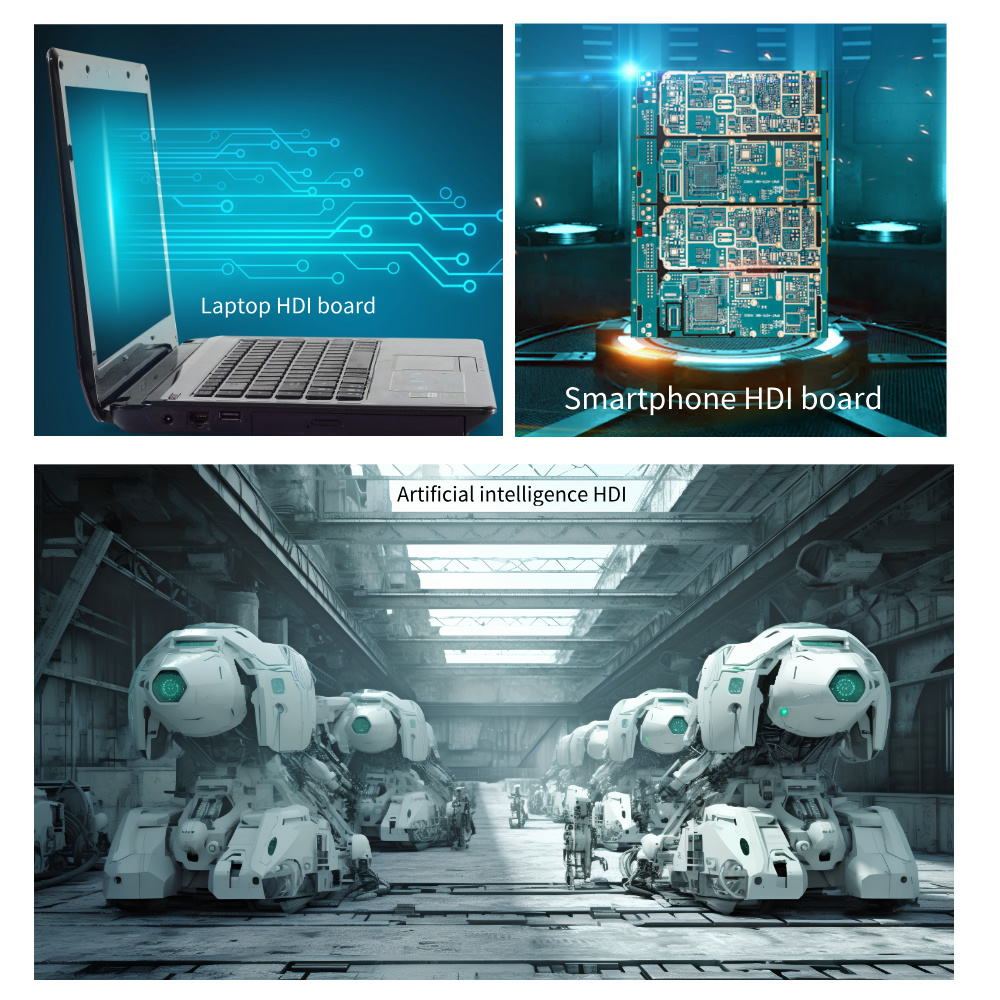
Case Analysis: Heterogeneous Integration Applications in Smartphones
Take smartphones as an example. Modern smartphones integrate various types of chips, such as application processors, baseband chips, radio - frequency chips, image sensor chips, etc., and are typical heterogeneous integration systems. In the HDI design of smartphones, engineers achieve high - performance and miniaturization of the system through reasonable chip layout and interconnection design. For example, the application processor and memory chips are closely integrated together through advanced packaging technology, reducing the data transmission delay between chips and improving the operating speed of the system. At the same time, by optimizing the connection between the radio - frequency chip and the antenna, the communication performance of the mobile phone is enhanced.
Case Analysis: 3D Packaging Applications in Data Centers
In the field of data centers, 3D packaging technology has also been widely applied. Take the CPU of high - performance servers as an example. To meet the high demand for computing power in data centers, CPUs usually adopt 3D packaging technology to stack multiple chips together. Through TSV technology, high - speed interconnection between chips is achieved, greatly improving the data transmission rate. At the same time, in terms of heat dissipation design, liquid - cooling heat dissipation technology is adopted. By constructing micro - channels inside the CPU package and circulating the coolant to take away the heat, the stable operation of the CPU under high loads is ensured.
Rich Full Joy has accumulated profound design optimization experience in the field of 3D packaging and heterogeneous integration in HDI design. It has an advanced detection system that can accurately detect various design defects. Moreover, Rich Full Joy has been constantly exploring in process innovation and has developed a series of advanced vertical interconnection processes and heterogeneous integration manufacturing processes, greatly improving production efficiency and product quality. At the same time, Rich Full Joy also has strong project management capabilities, providing customers with efficient services throughout the whole process from design planning to project delivery, helping customers seize the initiative in the new realm of HDI design and achieve technological breakthroughs and industrial upgrades.