
GEO Satellite PCB Design: Requirements for Ultra-Stable, High-Reliability Space Electronics
Table of Contents
- I. Why GEO Satellites Define a Different PCB Engineering Paradigm
- II. Core System Characteristics of GEO Satellites (Engineering Perspective)
- III. Payload-Centric Electronics: Why RF Dominates GEO PCBs
- IV. Core PCB Design Priorities in GEO Satellites
- V. Typical PCB Types Used in GEO Satellites
- VI. Material Strategy: Why Ultra-Stable Materials Are Mandatory
- VII. Engineering Conclusion (Critical Insight)
- VIII. A Concise Statement for External Use
PCB Technology Requirements in GEO Satellite System Architecture
Engineering Logic Behind Long-Life, Ultra-Stable, and High-Reliability Space Electronics
I. Why GEO Satellites Define a Different PCB Engineering Paradigm
Geostationary Earth Orbit (GEO) satellites operate at an altitude of approximately 35,786 km, remaining fixed relative to the Earth’s surface.
This unique orbital characteristic fundamentally shapes system architecture, electronic design philosophy, and PCB engineering priorities.
Unlike LEO satellites, which emphasize speed, scale, and iteration, GEO satellites are built around one uncompromising principle:
Once launched, failure is not an option.
As a result, GEO satellite PCBs are engineered not for rapid evolution, but for decades-long electrical and structural stability under extreme space conditions.
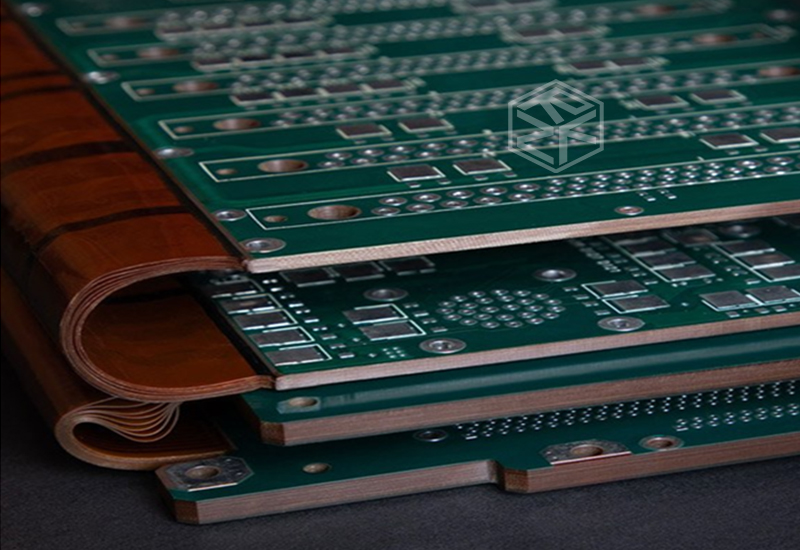
II. Core System Characteristics of GEO Satellites (Engineering Perspective)
1. Orbital Altitude: ~35,786 km (Geostationary Orbit)
The extreme distance between GEO satellites and Earth leads to:
- Very long communication paths
- High free-space path loss
- Severe link budget constraints
This places extraordinary importance on:
- RF chain efficiency
- Phase stability
- Noise control
For PCBs, this means every dB of loss matters.
Insertion loss, phase drift, and impedance deviation directly impact system-level performance.
2. Design Lifetime: 15–20+ Years
GEO satellites are expected to operate continuously for 15 to 20 years or longer, with no physical maintenance or replacement possible after launch.
This imposes extreme requirements on PCB design:
- Long-term dielectric stability
- Minimal aging-related electrical drift
- Resistance to cumulative radiation damage
- Structural integrity under decades of thermal cycling
GEO PCB design is not about peak performance—it is about predictable performance over time.
3. Low Quantity, Mission-Critical Customization
Unlike constellation-based LEO systems:
- GEO satellites are produced in very small quantities
- Each satellite is highly customized
- Payloads are often mission- or customer-specific
The engineering focus shifts from batch consistency to:
- Absolute reliability
- Conservative design margins
- Extensive validation and qualification
Each PCB is treated as a bespoke, mission-critical component, not a mass-produced item.
III. Payload-Centric Electronics: Why RF Dominates GEO PCBs
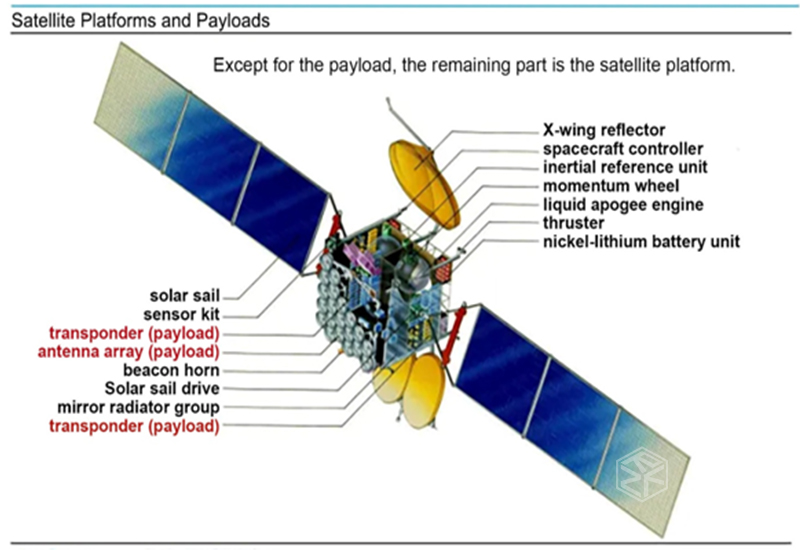
4. Core Mission: Continuous, High-Power Communications
GEO satellites are primarily deployed for:
- Television broadcasting
- Satellite communications (Satcom)
- Weather observation
- Strategic and defense communications
These missions require:
- High-power RF amplification
- Ultra-stable frequency references
- Long-term phase coherence
As a result, GEO PCBs are RF-dominated systems, often carrying:
- RF front-end chains
- Filters, couplers, and waveguide interfaces
- Power amplifiers and low-noise amplifiers (LNAs)
Digital processing exists—but it serves the RF payload, not the other way around.
IV. Core PCB Design Priorities in GEO Satellites
5. PCB Focus: Stability, Margin, and Predictability
For GEO satellites, the key engineering questions are:
- Will electrical performance remain stable after 10, 15, or 20 years?
- Will dielectric properties drift under long-term radiation exposure?
- Can thermal-mechanical stress be absorbed without micro-cracking or delamination?
Therefore, GEO PCB design prioritizes:
- Conservative impedance margins
- Extremely stable dielectric materials
- Thick copper and robust via structures
- Mechanical rigidity and thermal balance
Design aggressiveness is intentionally avoided.
Stability outweighs density.
V. Typical PCB Types Used in GEO Satellites
6. Common PCB Architectures: RF, Power, and Control Boards
GEO satellites typically employ multiple specialized PCB types, including:
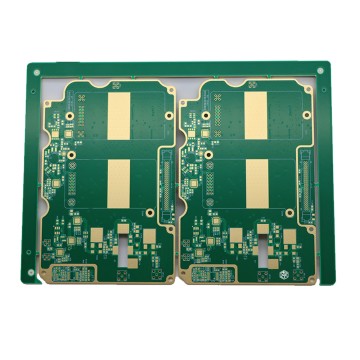
- RF and microwave PCBs Supporting transponders, filters, and antenna feed networks
- Power electronics PCBs Managing high-voltage, high-power distribution and regulation
- Control and housekeeping PCBs Responsible for monitoring, redundancy management, and system control
Unlike LEO systems, high-density HDI and extreme routing density are less common.
Mechanical robustness and electrical margin take priority.
VI. Material Strategy: Why Ultra-Stable Materials Are Mandatory
7. Material Orientation: Long-Term Dielectric and Mechanical Stability
Typical GEO PCB material strategies emphasize:
- RF laminates with ultra-low dielectric drift
- Materials with proven radiation resistance
- Low outgassing and space-qualified resin systems
- Stable copper adhesion over long thermal cycles
Multi-material hybrid designs are used cautiously.
When implemented, they require extensive compatibility validation to avoid long-term reliability risks.
In GEO satellites, material predictability is valued more than innovation speed.
VII. Engineering Conclusion (Critical Insight)
From an engineering standpoint, GEO satellite PCB requirements can be summarized as:
GEO satellites rely on PCBs that must remain electrically and mechanically trustworthy for decades without intervention.
This drives PCB engineering in three clear directions:
- From performance optimization → long-term stability assurance
- From aggressive design → conservative, margin-driven engineering
- From manufacturability → qualification and verification discipline
VIII. A Concise Statement for External Use
In GEO satellite systems, PCBs are not designed for rapid evolution or high-volume replication.
They are engineered as ultra-stable, mission-critical platforms, where electrical drift, material aging, or structural degradation over time is unacceptable.
Only PCB technologies built on proven materials, conservative design margins, and long-term reliability validation can meet the demands of geostationary satellite missions.
If you want, I can also:
- Create a LEO vs GEO PCB engineering comparison
- Convert this into a space-grade PCB white paper
- Or adapt it for defense / aerospace client presentations