
Can Long-Stored PCBs Still Be Used? Technical Guidance & Reliability Analysis
Can Long-Stored PCBs Still Be Used?
Technical Guidance from RICH FULL JOY
Short answer: A PCB does not “expire” like food. Many boards stored for years can still be used if solderability, moisture exposure, and contamination risks are properly verified before production. Time alone is not destructive — storage conditions determine reliability.
1. Time isn’t the real problem — environment is
Long storage mainly amplifies environmental effects:
- Moisture absorption → increased leakage, delamination risk during heating
- Oxidation or sulfidation → poor solder wetting
- Ionic contamination → electrochemical migration (ECM) under bias
- Thermal / humidity cycling → interfacial stress accumulation over years
Boards kept vacuum-sealed with desiccant in low humidity and stable temperature age far more safely than boards exposed to ambient air, high RH, or repeated unpacking.
From a reliability engineering perspective, the PCB is stable — the surrounding environment is what ages it.
2. Surface finish determines long-term solderability
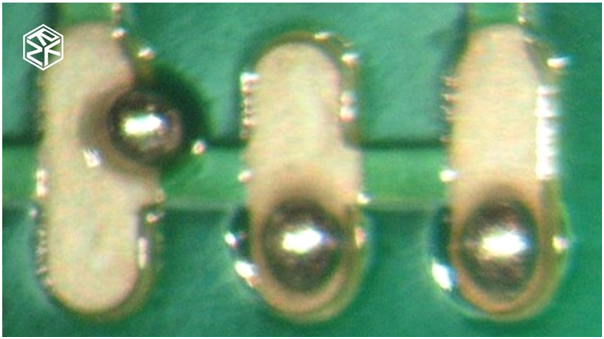
Different finishes tolerate storage time differently:
- ENIG / ENEPIG: Generally stable. Primary Risks: Surface contamination, interface aging.
- HASL (SnPb or Lead-Free): Fairly robust. Primary Risks: Surface oxidation.
- Immersion Silver: Moderate. Primary Risks: Sulfidation/tarnish, slower wetting.
- Immersion Tin: Moderate to sensitive. Primary Risks: Oxidation, IMC growth.
- OSP: Most sensitive. Primary Risks: Organic film degradation → non-wetting.
Engineering rule: Long storage does not guarantee failure, but OSP boards require the most caution.
3. Why boards that passed before may fail years later
It is common to see low failure rates after long storage (for example, a few shorts in a batch). These usually result from time-dependent mechanisms:
- Electrochemical Migration (ECM): Moisture + ionic residues allow conductive dendrites to grow between fine traces. Early stage = leakage; later = hard shorts.
- CAF (Conductive Anodic Filament): A conductive path forms along the glass-resin interface between vias or via-to-trace. Requires humidity, bias voltage, and time to develop.
- Surface Oxidation / Contamination: Leads to slow wetting, dewetting, or unstable solder joints during assembly.
- Test-related false shorts: Aged fixtures, dirty probes, debris, or mismatched test programs can create false failures. Always eliminate this possibility first.
4. Minimum high-value checks before releasing old PCBs
At RICH FULL JOY, long-stored PCB evaluation typically focuses on high-information screening steps:
- Visual and Microscopic Inspection (10–50×): Check for pad discoloration, tarnish, dendrites, corrosion, solder mask damage.
-
Controlled Baking + Retest (Diagnostic Step): Low-temperature, long-duration baking reduces surface moisture.
- If shorts disappear → moisture / ECM likely
- If shorts remain → possible metal bridge or matured CAF
- Solderability / Trial Assembly Testing: Use real production flux and reflow profiles to evaluate wetting performance.
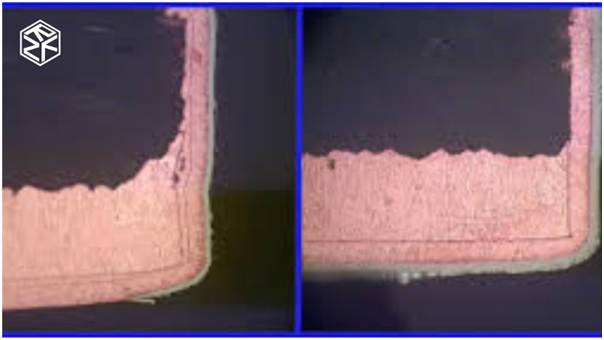
- Failure Analysis (for critical applications): Cross-sectioning can reveal CAF, inner-layer shorts, or interfacial degradation.
5. Practical disposition guidelines
-
Condition: ENIG/HASL, dry sealed storage, good appearance, normal wetting.
- Risk Level: Low
- Recommendation: Release for production
-
Condition: ImmAg/ImmSn, some air exposure, mild discoloration, borderline wetting.
- Risk Level: Medium
- Recommendation: Use with segregation and extra screening
-
Condition: OSP aged with exposure, heavy oxidation, repeatable hard shorts, CAF evidence.
- Risk Level: High
- Recommendation: Quarantine or re-evaluate for scrap
6. How to prevent future long-term storage risks
Professional PCB manufacturers like RICH FULL JOY recommend:
- Vacuum sealing with desiccant and humidity indicator cards
- Tracking open time and resealing promptly
- Periodic re-qualification sampling for long-term stock
- Keeping old and new PCB lots segregated in production
Final Engineering Perspective
Long-stored PCBs can often be used safely. However, verification is mandatory because moisture, oxidation, and contamination risks increase with time. In reliability engineering, time amplifies what storage conditions allow — and proper evaluation ensures that aging inventory does not become a hidden failure source.