
SMT PCB Assembly and ESD Protection: Everything You Need to Know!
SMT PCB Assembly and ESD Protection: Everything You Need to Know!
In the world of SMT (Surface-Mount Technology) PCB assembly, achieving high-quality, reliable electronic products requires much more than just precision placement and soldering. One critical factor that often goes unnoticed but can make or break the integrity of a printed circuit board (PCB) is Electrostatic Discharge (ESD).
For over 20 years, we at [Your Company Name] have been working at the forefront of PCB manufacturing and assembly, and we know that protecting components from static electricity is just as essential as precision placement. In this article, we’ll dive deep into the science behind ESD protection in SMT PCB assembly, why it’s crucial, and how to implement best practices to safeguard your components.
- What is Electrostatic Discharge (ESD)?
Electrostatic Discharge (ESD) refers to the sudden flow of electricity between two electrically charged objects. This happens when a static charge—either from a person, a piece of equipment, or an improperly grounded PCB—builds up and is released suddenly, which can damage sensitive electronic components on the PCB.
SMT PCB assemblies are particularly vulnerable to ESD because they often contain small, highly sensitive components that can easily be damaged by even a small amount of electrostatic charge. The damage caused by ESD can result in:
- Component failure
- Performance degradation
- Shortened lifespanof the PCB or its components
Without proper ESD protection, these risks multiply, which is why effective ESD control measures are essential in PCB assembly.
- How Does ESD Impact SMT PCB Assembly?
When working with SMT assembly, the components used—resistors, capacitors, integrated circuits (ICs), and especially semiconductors—are highly sensitive to electrostatic charges. Even small amounts of static electricity can have catastrophic effects on these components, potentially leading to:
- Component malfunction
- Incomplete circuitsdue to damaged connections
- Functional failurein the end product
ESD damage can either cause immediate failure or latent failure, where the damage is not immediately noticeable but causes the component to fail prematurely. In industries like consumer electronics, medical devices, and automotive systems, reliability is non-negotiable. Hence, incorporating effective ESD control measures is critical.
- The Importance of ESD Protection in SMT PCB Assembly
Implementing ESD protection is essential to avoid expensive damage and production downtime. The goal is to mitigate static build-up and discharge safely without compromising the assembly process. Some of the key reasons why ESD protection is important in SMT PCB assembly include:

Preventing Permanent Component Damage:
- Sensitive Components: Modern electronics, especially microchips, transistors, and semiconductors, are sensitive to even a tiny static charge. ESD can cause the destructionof silicon chips or microcircuits, rendering them useless.
Reducing Assembly Defects:
- Static Dischargecan result in poor component placement and soldering quality, leading to assembly defects and rework.
Increasing Production Efficiency:
- Implementing ESD-safe environmentshelps ensure smooth assembly and reduces the risk of downtime caused by component damage.
Enhancing Product Reliability:
- ESD protection ensures that products meet the highest standards of reliability, especially in sensitive applications such as medical devices, military electronics, and automotive systems.
- ESD Protection Strategies for SMT PCB Assembly
Effective ESD protection involves a combination of environmental controls, materials handling procedures, and ESD-safe equipment. Let’s take a closer look at how each of these elements plays a role in maintaining a safe, static-free assembly line.
- ESD-Safe Workstations:
- Workbenches, floors, and chairsshould be equipped with ESD-safe materials to prevent the buildup of static charges. These workstations are grounded to ensure that any electrostatic charge is safely dissipated.
- Proper Grounding:
- Groundingis one of the most important ESD control measures. All equipment and personnel in the SMT PCB assembly process should be properly grounded to prevent any static discharge. This includes:
- Personnel Grounding: Wrist strapsand heel straps worn by operators to safely discharge any static.
- Equipment Grounding: Proper grounding of pick-and-place machines, soldering irons, and component feeders.
-
ESD-Safe Equipment:
- Using ESD-safe toolssuch as tweezers, tongs, and soldering irons minimizes the risk of transferring static charge to components.
- ESD-Safe Materials Handling:
- ESD-safe trays, containers, and bagsshould be used to store and transport sensitive components to avoid static buildup during handling. Conductive packaging materials are used to prevent electrostatic discharge during transit and storage.
- Humidity Control:
- Low humiditylevels can increase the buildup of static electricity. Maintaining a controlled humidity level (around 50% RH) in the SMT assembly environment helps to minimize the risk of ESD.
- ESD-Safe Practices for SMT PCB Assembly: Best Practices to Follow
In addition to technical measures, adopting the following best practices can help minimize ESD risks in the SMT assembly process:
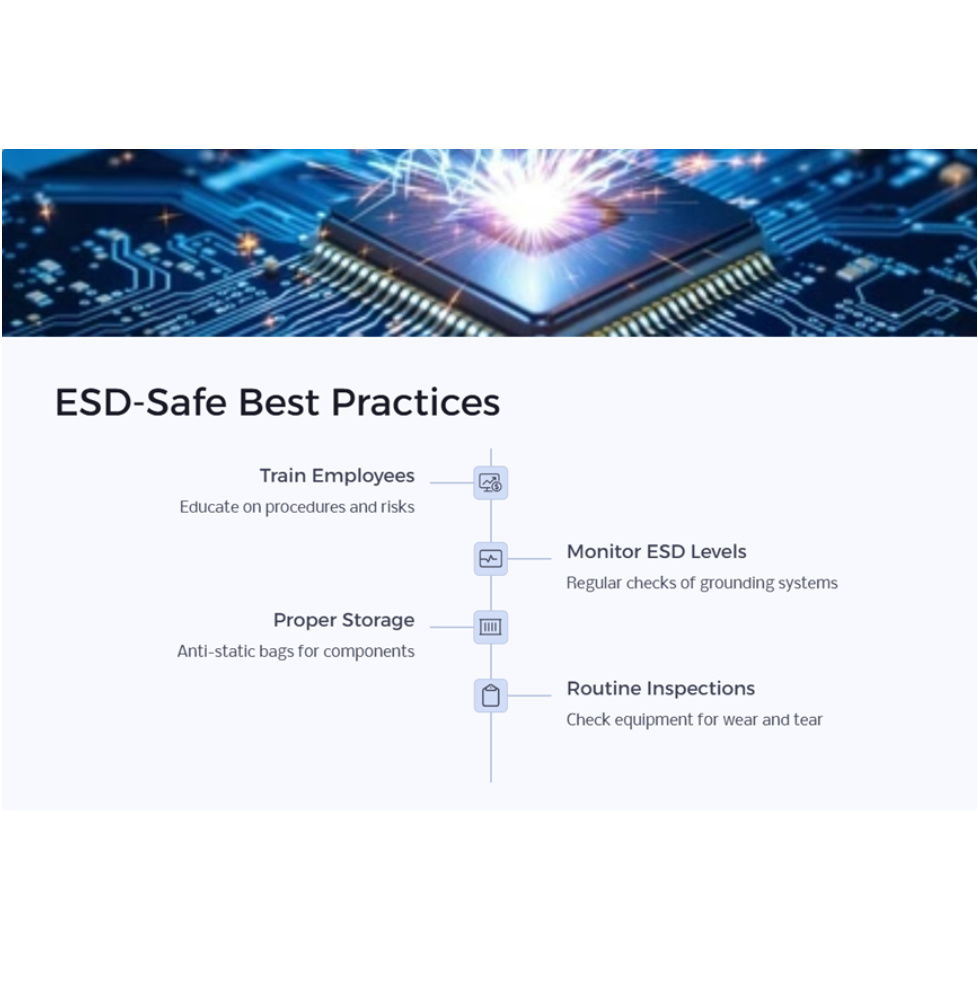
- Train Employees: Ensure that all assembly line workers are trained in ESD-safe proceduresand understand the risks associated with static discharge.
- Monitor ESD Levels: Regularly check the grounding systemsand use ESD meters to ensure that safe levels of static charge are maintained throughout the facility.
- Proper Storage: Store components in anti-static bagsand keep them away from static-prone environments.
- Routine Inspections: Regularly inspect ESD equipmentand workstations for wear and tear and replace them when necessary.
- Advanced Technologies in ESD Protection for SMT PCB Assembly
In addition to the standard ESD protection practices, emerging technologies are making it easier to protect components from electrostatic damage.
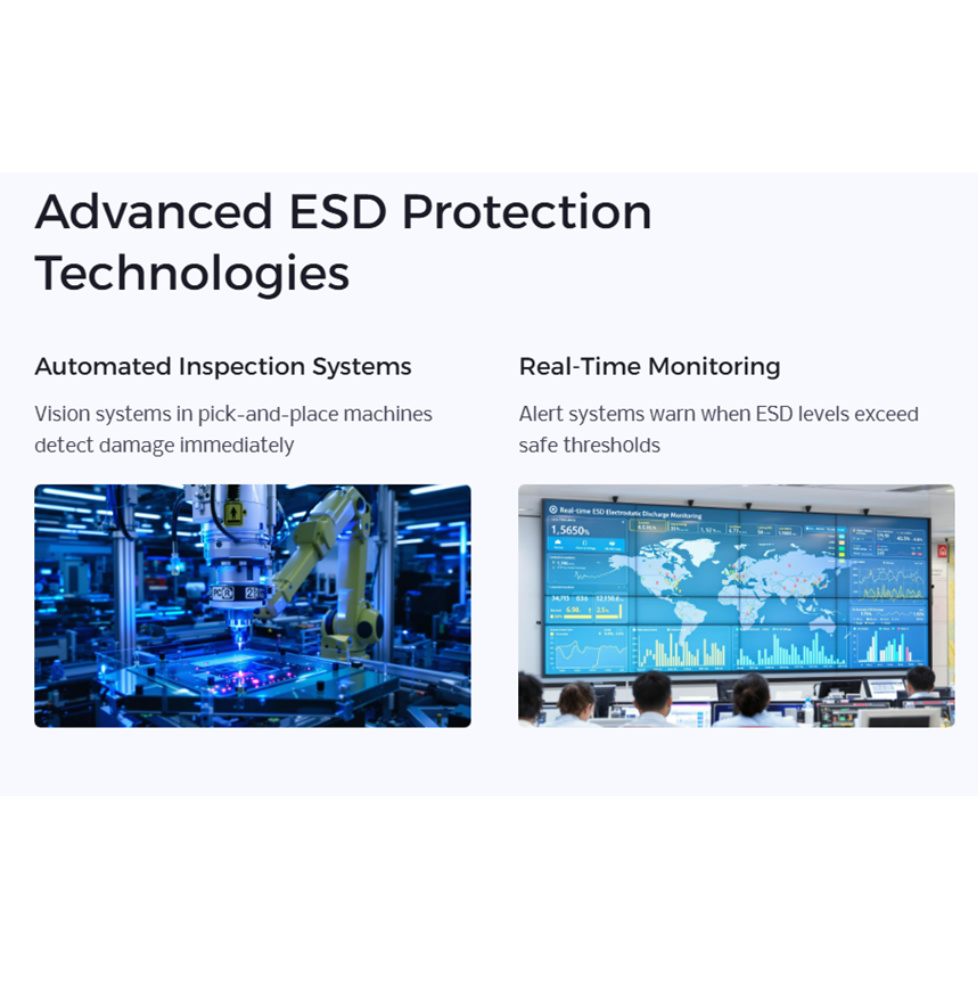
- Automated Inspection Systems: With the integration of vision systemsin pick-and-place machines and automated inspection systems, static-sensitive components can be precisely handled, and any damage can be detected immediately.
- Real-Time Monitoring: Some facilities are now using real-time ESD monitoring systems, which automatically alert staff if ESD levels exceed safe thresholds.
The Critical Role of ESD Protection in SMT PCB Assembly
As electronic devices become increasingly complex and miniaturized, the risk of ESD damage grows. Proper ESD protection in SMT PCB assembly is essential for ensuring that your PCBs are free from defects and reliable over their lifetime. By implementing robust ESD control measures, such as grounding, ESD-safe materials, and advanced monitoring systems, you can protect your components and ensure a smooth, defect-free assembly process.
At Rich full joy, we have over 20 years of expertise in PCB manufacturing and assembly. We understand the vital role of ESD protection and have implemented stringent control measures to safeguard sensitive electronic components during every stage of the SMT PCB assembly process. If you need help optimizing your ESD protection systems, contact us today for expert advice and solutions.