
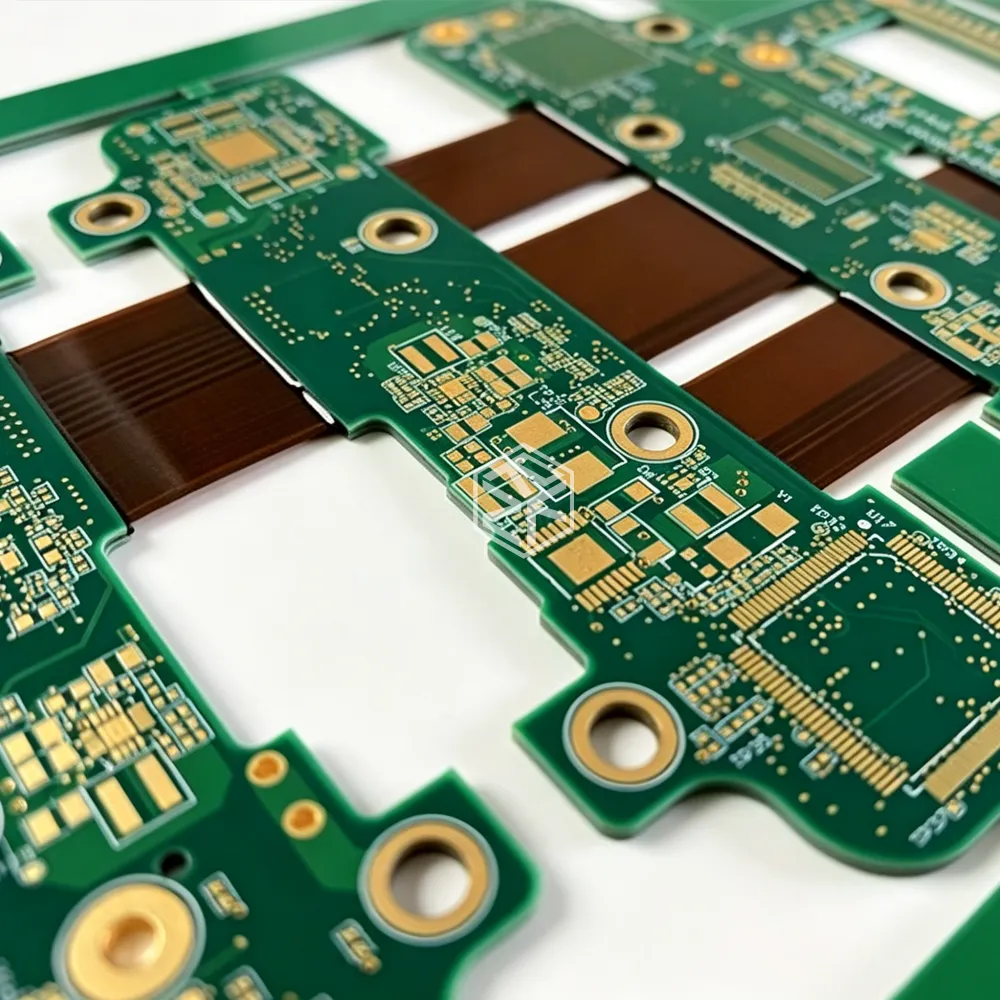
Rogers vs FR4: Choosing PCB Materials for AI Server Applications
Table of Contents
- Understanding PCB Materials and Their Role in AI Hardware
- Why PCB Material Selection Matters for AI Servers
- What is FR4? A Closer Look at the Industry Standard
- What is Rogers PCB Material? The High-Performance Alternative
- Rogers vs FR4: Key Differences Explained
- Performance Testing in AI Server Environments
- Choosing the Right Material for AI Server PCB Design
- Future Trends in PCB Materials for AI Systems
- FAQs about Rogers vs FR4 for AI Servers
- Making the Smart Choice for AI Server PCB Design
Understanding PCB Materials and Their Role in AI Hardware
In the world of AI server design, every nanosecond counts. Printed Circuit Boards (PCBs) are the unsung backbone of the data revolution — they interconnect processors, GPUs, and memory units that power artificial intelligence workloads. The choice of PCB material directly affects signal integrity, heat dissipation, and power delivery in high-speed computing systems.
AI servers operate in a unique environment — one dominated by high frequencies, dense interconnects, and massive power draw. As neural networks scale in complexity, PCB substrates must support multi-gigahertz signals with minimal loss. That's where material science enters the conversation — and why Rogers and FR4 have become the two most discussed names among engineers designing AI infrastructure.
Why PCB Material Selection Matters for AI Servers
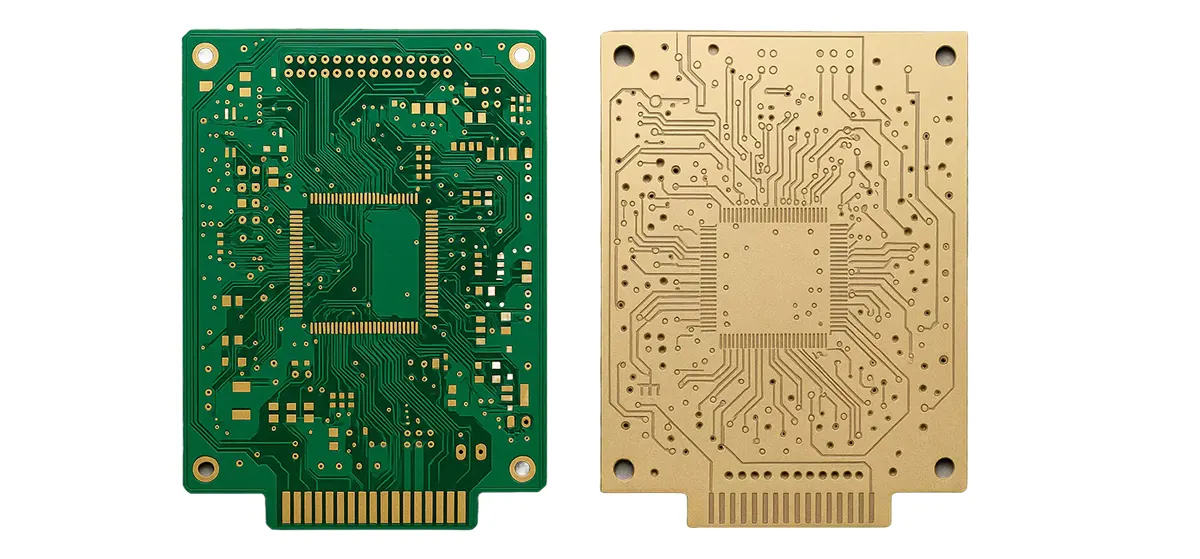
An AI server's printed circuit board is not just a sheet of fiberglass; it's a signal highway connecting high-frequency components. As clock speeds rise and data paths widen, the dielectric material under those copper traces becomes critical. Even slight differences in dielectric constant (Dk) or dissipation factor (Df) can lead to timing skew, crosstalk, or electromagnetic interference (EMI).
For example, a Dk variation of just 0.1 can shift signal propagation speed enough to cause synchronization errors at multi-gigahertz frequencies. That's why material consistency and thermal stability matter as much as raw performance.
What is FR4? A Closer Look at the Industry Standard
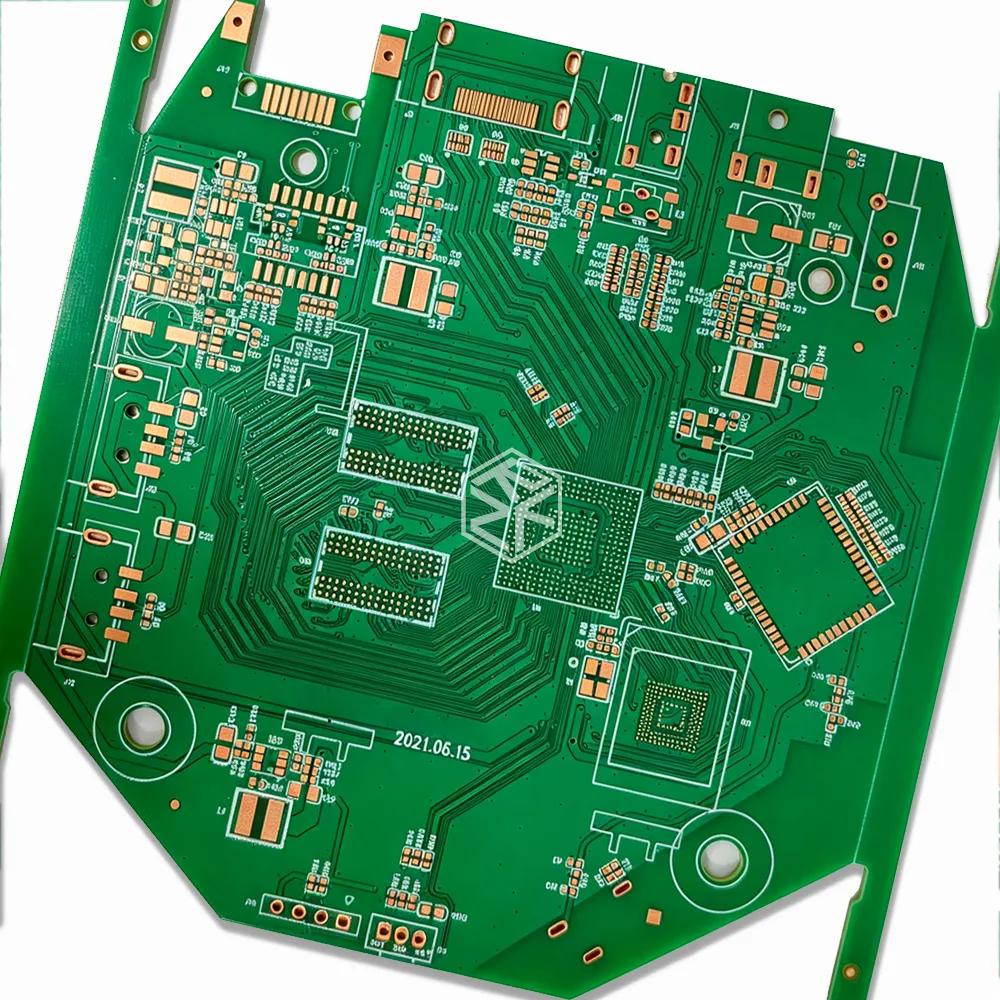
FR4 has been the default PCB substrate for decades. It's a glass-reinforced epoxy laminate known for affordability, availability, and good mechanical strength. For most consumer electronics and even standard server motherboards, FR4 provides the perfect balance between cost and reliability.
Key Advantages of FR4
- Cost-effective: FR4 is inexpensive and widely manufactured worldwide.
- Easy to fabricate: Compatible with standard etching, drilling, and plating processes.
- Mechanically strong: Resistant to flexing and moisture absorption under normal conditions.
Limitations of FR4 in High-Frequency AI Applications
However, FR4 begins to struggle in high-speed and high-temperature environments. Its dielectric constant typically ranges between 4.2–4.8, and its dissipation factor (Df) can reach 0.02, causing significant signal loss at frequencies above 5 GHz. AI servers handling 100+ Gbps interconnects often exceed these thresholds.
Thermal management is another concern. FR4's glass transition temperature (Tg) hovers around 130–150°C, which may not suffice for GPUs operating under heavy load.
What is Rogers PCB Material? The High-Performance Alternative
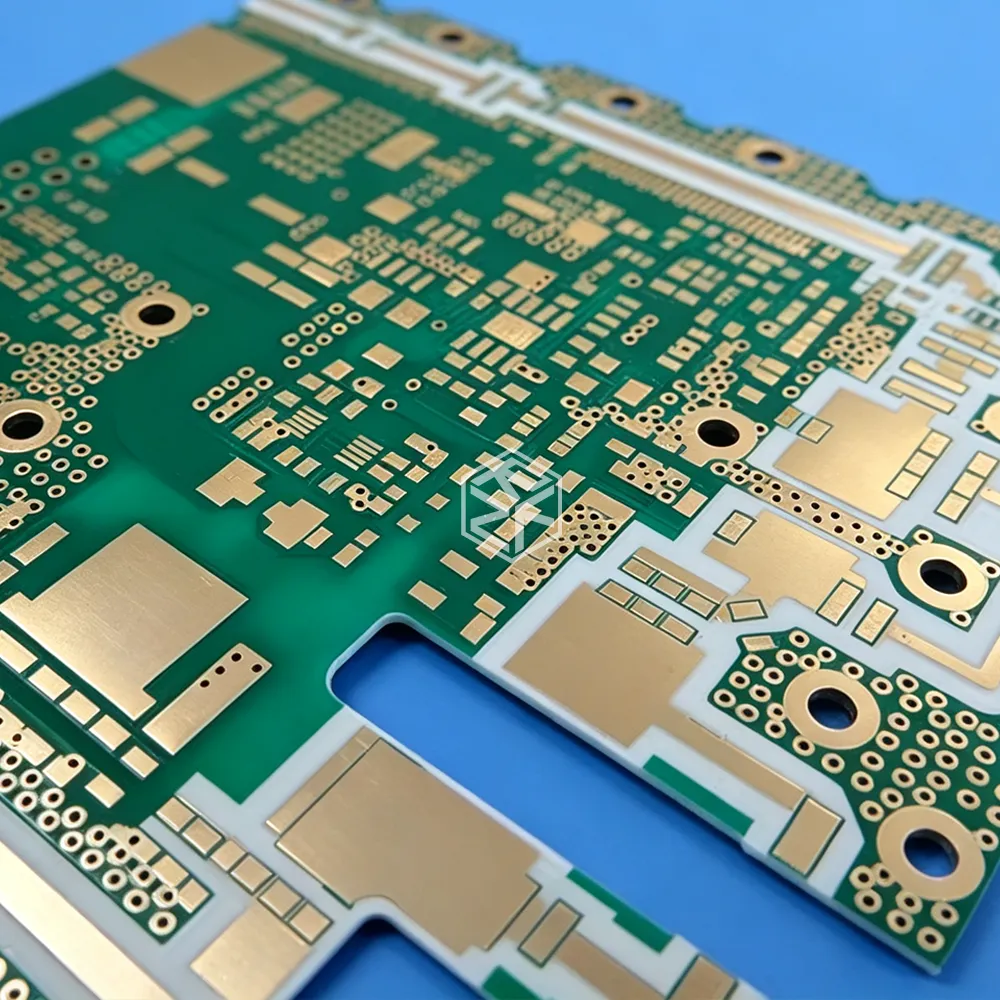
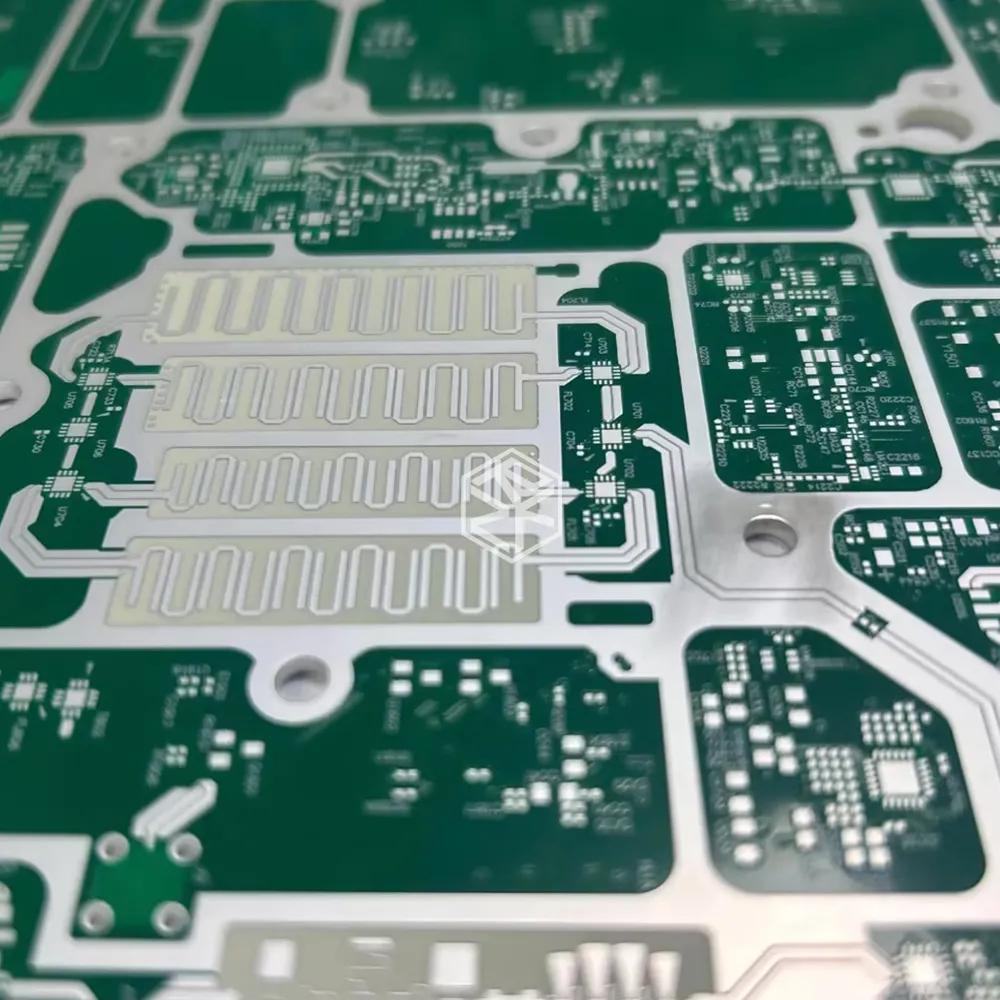
Rogers Corporation produces high-frequency laminates specifically engineered for RF and microwave applications — domains where signal loss is catastrophic. The Rogers RO4000 and RO3000 series have become industry standards for 5G antennas, satellite systems, and high-speed computing.
Advantages of Rogers Materials
- Low dielectric loss: Df as low as 0.001–0.004, ensuring minimal signal attenuation.
- Stable Dk: Typically 2.9–3.5, maintaining consistent impedance at GHz frequencies.
- Excellent thermal performance: Tg values up to 280°C or more.
- Superior dimensional stability: Reduces warping in large, multilayer PCBs.
Limitations and Cost Factors
The main drawback is cost. Rogers materials can be 5–10 times more expensive than FR4. Moreover, they require specialized lamination processes, making manufacturing more complex. For small-scale designs, the cost may be prohibitive, but in high-performance AI servers, the efficiency gains often justify the investment.
Rogers vs FR4: Key Differences Explained
| Property | FR4 | Rogers (RO4000 series) |
|---|---|---|
| Dielectric Constant (Dk) | 4.2–4.8 | 3.2–3.5 |
| Dissipation Factor (Df) | 0.02 | 0.003–0.004 |
| Glass Transition Temperature (Tg) | 130–150°C | 280°C+ |
| Moisture Absorption | 0.10–0.20% | 0.02–0.06% |
| Frequency Stability | Moderate | Excellent |
| Cost | Low | High |
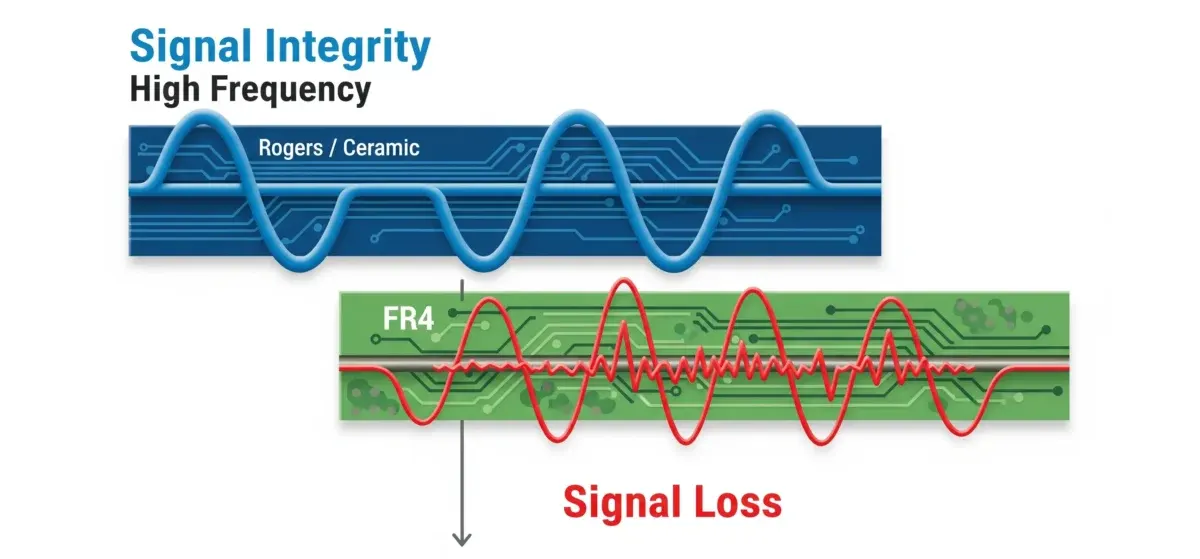
At frequencies above 10 GHz, Rogers outperforms FR4 by maintaining consistent impedance and minimizing signal loss — a critical requirement in AI systems that rely on high-speed interconnects like PCIe Gen5, NVLink, or CXL.
Performance Testing in AI Server Environments
In real-world testing, Rogers-based PCBs show up to 35% less signal degradation in high-speed traces compared to FR4. For AI servers performing tensor computations, this translates to more stable clock synchronization, fewer bit errors, and reduced latency across CPU-GPU buses.
Additionally, Rogers laminates handle thermal cycling better — a key factor when GPUs throttle under sustained AI training loads.
Choosing the Right Material for AI Server PCB Design
The right choice depends on frequency, system size, and budget.
- For AI inference servers operating below 5 GHz, high-grade FR4 may suffice.
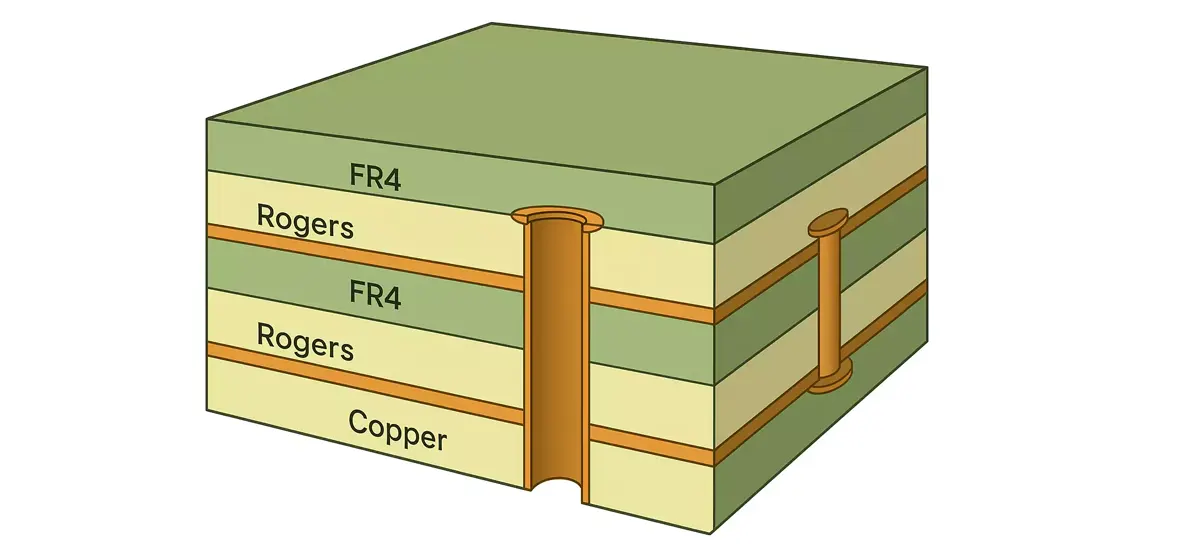
- For AI training clusters with ultra-high-speed interconnects, Rogers or hybrid Rogers-FR4 boards are preferred.
Hybrid PCB Design Approach
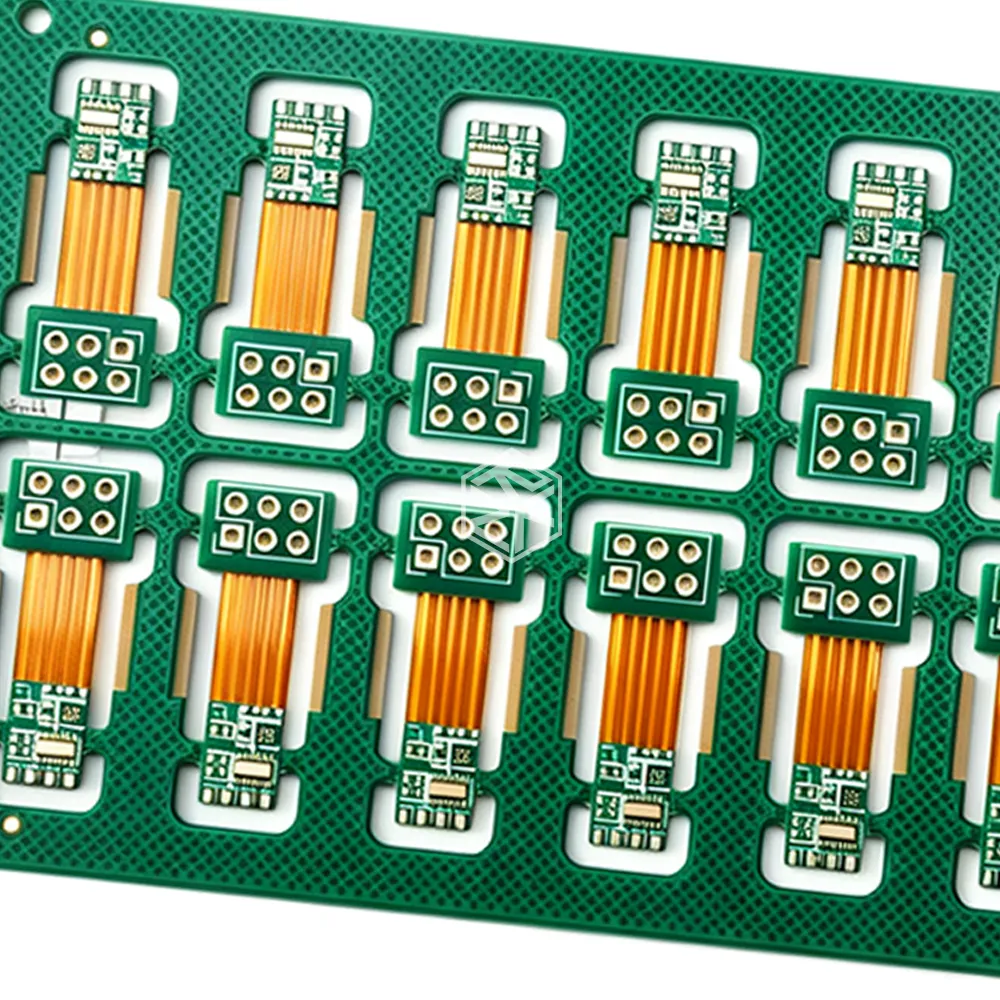
A hybrid approach uses Rogers laminates for high-speed signal layers (like transceivers or memory interfaces) and FR4 for power and ground layers. This reduces cost while maintaining performance where it matters most.
Environmental and Reliability Factors
Rogers laminates absorb less moisture, retain dielectric properties better, and resist delamination under repeated heating cycles — all essential for 24/7 AI data center operation. FR4, while durable, tends to age faster under thermal and environmental stress.
Future Trends in PCB Materials for AI Systems
Researchers are exploring nanocomposite substrates, liquid crystal polymers (LCPs), and ceramic-filled PTFE laminates as next-generation solutions. These materials promise ultra-low dielectric loss and improved thermal stability, potentially surpassing both FR4 and Rogers in performance.
FAQs about Rogers vs FR4 for AI Servers
1. Is Rogers always better than FR4?
Not necessarily — Rogers excels in high-frequency, high-performance environments, but FR4 remains ideal for cost-sensitive or moderate-speed designs.
2. Can FR4 be used in AI servers?
Yes, for non-critical or lower-speed signal layers. Many manufacturers use hybrid boards combining both materials.
3. Why is Rogers so expensive?
Rogers uses specialized polymers and precise manufacturing techniques to maintain signal integrity at very high frequencies.
4. Does Rogers have better thermal performance?
Yes, it can withstand higher temperatures without dielectric breakdown or mechanical deformation.
5. How do dielectric constant and dissipation factor affect AI hardware?
They determine how efficiently high-speed signals propagate through the PCB — lower Df and stable Dk mean faster, cleaner data transmission.
6. What's the best material for future AI servers?
Hybrid solutions using Rogers and advanced composites are emerging as the most balanced approach for next-gen designs.
Making the Smart Choice for AI Server PCB Design
In the race toward faster, smarter AI systems, PCB materials are the silent enablers of performance. While FR4 remains the reliable workhorse, Rogers materials deliver the signal integrity and thermal resilience modern AI servers demand. For cutting-edge data centers handling enormous compute loads, Rogers or hybrid designs are the clear winners.