
Table of Contents
Introduction
As drones become increasingly autonomous, their ability to perform tasks independently of human control is becoming a defining factor in industries such as agriculture, logistics, military, and infrastructure inspection. However, the true power of autonomous drones lies not only in AI algorithms but in the custom PCBs that enable real-time processing, sensor fusion, and efficient power management. This article explores how custom PCB design is the foundation for intelligent UAVs, providing insights into critical design considerations and real-world applications.
The Role of Custom PCB Design in AI-Driven Drones
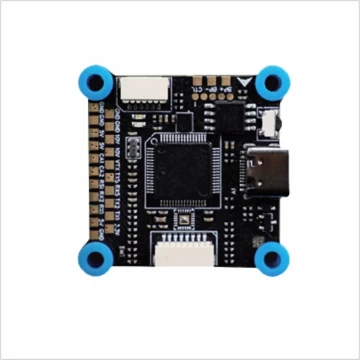
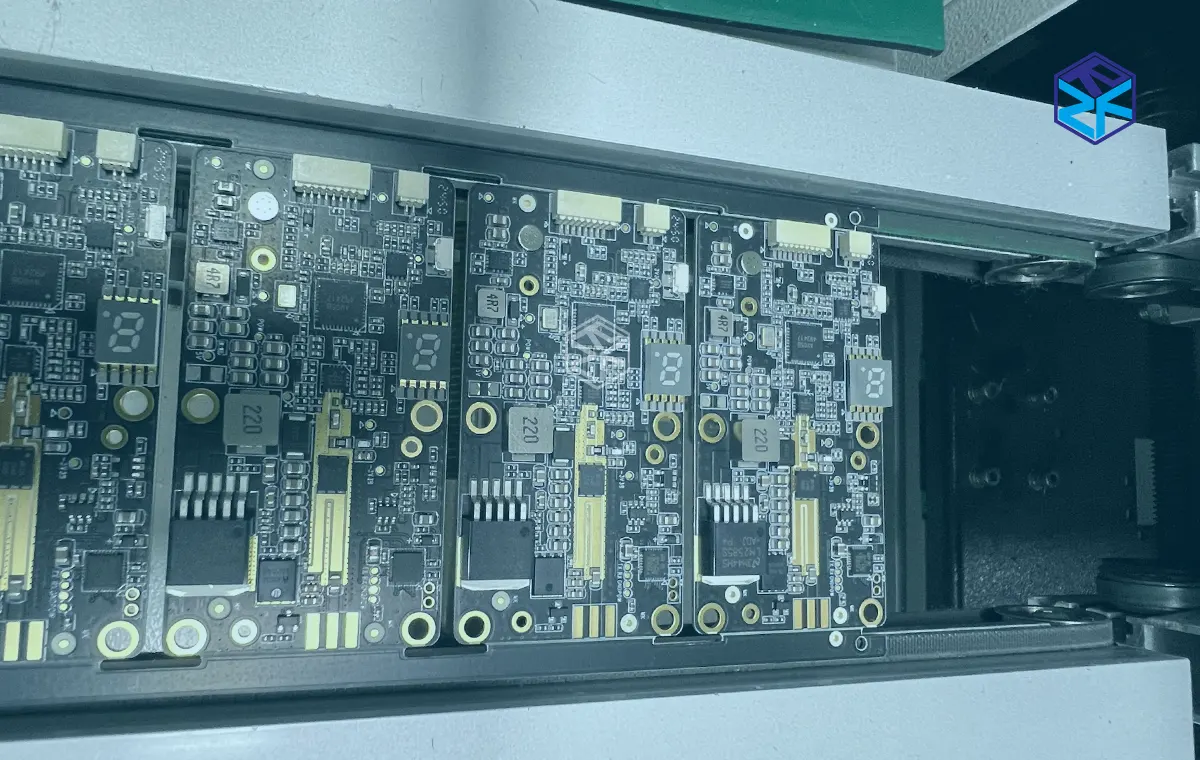
The integration of AI and autonomous systems into drones requires more than just software. Advanced onboard processing power and sensor integration must be supported by robust hardware. Custom PCBs are the nervous system of autonomous drones, supporting everything from real-time sensor data fusion to edge AI processing.
Key Challenges in AI-Driven Drone Design:
- High Data Throughput: AI systems demand immense amounts of data. Custom PCBs allow drones to handle the high throughput required for processing real-time video feeds, sensor data, and AI inference tasks without compromising flight performance.
- Low-Latency Data Processing: Drones need to process data in milliseconds, especially for real-time applications like collision avoidance. Custom PCB layouts with specialized FPGA or ASIC integration offer hardware-accelerated performance, reducing latency by over 90%.
- Power Efficiency: Running complex algorithms and supporting multiple sensors can drain power quickly. Optimized PCBs offer dynamic voltage scaling and low-power sleep modes to extend flight time.
Core Technical Components: Precision and Efficiency
1. Sensor Fusion and Precision
Modern drones rely on a combination of LiDAR, radar, vision sensors, and IMUs for autonomous navigation. These sensors need to be synchronized with precision timing and data integrity.
- Sensor Integration: Using ARM Cortex-M processors or FPGA solutions, custom PCBs handle simultaneous data from multiple sensors, ensuring accurate readings for navigation and obstacle detection.
- Signal Integrity: Impedance-controlled PCB routing ensures high-frequency signals from LiDAR or radar don't suffer from noise or degradation.
2. AI Processing: Powering Real-Time Inference
Onboard edge-AI enables real-time decision-making for autonomous drones. Custom PCB designs integrate NPUs (Neural Processing Units) optimized for AI algorithms like CNNs.
- Low Latency Processing: Hardware accelerators enable 3ms object detection using YOLOv7, reducing cloud dependency.
- Benchmark: Edge processing reduces cloud response times by 92% (IEEE Robotics, 2024).
3. Power Management: Extending Flight Time
Drones require highly efficient power systems to support AI workloads without sacrificing endurance.
- Dynamic voltage scaling adjusts power consumption during low-demand operations.
- Multi-layer heatsink PCBs provide better thermal management in extreme conditions.
Performance Benchmarks: Off-the-Shelf vs. Custom AI-Optimized PCBs
| Parameter | Off-the-Shelf PCB | Custom AI-Optimized PCB |
|---|---|---|
| Power Efficiency | 8-12W | 3-5W (Dynamic voltage scaling) |
| Processing Bandwidth | 4 TOPS | 28+ TOPS (Tensor cores) |
| Thermal Management | Passive cooling | Multi-layer heatsink PCBs |
| Update Cycle | 6-12 months | OTA firmware upgrades |
Source: NVIDIA Jetson Performance Benchmarks, Q2 2024
Industry Applications: Revolutionizing Various Sectors
1. Precision Agriculture
Custom PCBs enable real-time crop health mapping using multi-spectral sensors, supporting precision agriculture.
2. Search & Rescue
Custom radar PCBs with millimeter-wave radar allow drones to detect heat signatures or people behind walls during search operations.
3. Autonomous Delivery
Custom PCBs with encryption modules (Common Criteria EAL5+) ensure secure payload management during transportation.
Future Trends: Neuromorphic Computing and Beyond
Neuromorphic computing (mimicking the human brain's architecture) is poised to revolutionize AI processing. Emerging memristor-based PCBs offer 100x improvement in energy efficiency, enabling spiking neural networks (SNNs) to perform more efficiently. This is essential for Beyond Visual Line of Sight (BVLOS) operations under future FAA regulations.
Conclusion
The next generation of drones isn't just about flying. It's about autonomous decision-making enabled by custom PCBs that provide real-time AI processing, sensor integration, and low-latency control. With ongoing advancements in edge-AI and neuromorphic computing, custom PCB design will continue to transform UAVs from remote-controlled tools into intelligent aerial systems.